A City move often starts with nothing more dramatic than a center-back carrying forward, a full-back stepping inside, and a midfielder taking two quiet positions that bend the entire opposition block. Ten seconds later, the ball has traveled through three vertical lines, the far-side winger has pinned a defender, and the striker is finishing from a zone the defense never properly protected.
That’s why the phrase manchester city formation needs more than a flat lineup graphic. The shape on the team sheet matters, but it explains only the opening frame of the sequence. The story sits in the transformations between phases, the coordinated movements that turn a nominal back four into a three-player rest defense, a midfield screen into a box, and a front line into a layered occupation of width, half-spaces, and central channels. For supporters who want a visual cue for that identity, Striped Circle's Man City print captures the club’s aesthetic appeal, but the football itself is what gives the imagery meaning.
A broad squad-level view of Guardiola’s model sits in this breakdown of Manchester City’s winning philosophy and elite squad, but the sharper question is how City’s structure functions from minute to minute. The answer isn’t merely “4-3-3.” It’s a chain of phase changes. Out of possession, the distances are different. In build-up, the reference points shift. In the final third, the geometry becomes aggressive and highly choreographed.
Table of Contents
- INTRODUCTION
- THE 4-3-3 ON PAPER UNDERSTANDING THE BASE SHAPE
- THE IN-POSSESSION METAMORPHOSIS FROM 4-3-3 TO 3-2-5
- PLAYER ROLE MAPS THE ENGINES OF THE SYSTEM
- ATTACKING AND DEFENSIVE PHASE BREAKDOWN
- TACTICAL ADAPTATIONS AND RECENT EVOLUTIONS
- CONCLUSION COACHING FANTASY AND BETTING TAKEAWAYS
INTRODUCTION
Manchester City’s best football looks pre-arranged without feeling rigid. The ball circulation is patient, but the attack rarely feels static because each pass changes the next receiver’s angle. A center-back steps in. A full-back narrows. A wide player holds the touchline just long enough for a midfielder to arrive inside. The pattern looks simple only because the spacing is so clean.
The common shorthand has always been to call it a 4-3-3. That label isn’t wrong, but it’s incomplete. It describes the starting picture better than the actual match reality, and City are one of the clearest examples in elite football of why formations should be read by phase rather than by lineup card.
The Main Analytical Lens
The useful way to read the manchester city formation is through three questions:
- Where is the extra man created: Usually in the first or second line, where City manipulate pressure before the opponent can settle.
- Who protects the counter: The structure behind the ball is never accidental. It’s part of the attack.
- Which spaces are occupied last, not first: City often delay the final occupation of certain channels, which makes defenders react late.
That last point matters because Guardiola’s team doesn’t just fill zones. It times their filling. The result is that defenders often track movement after the ball has already changed the picture.
Practical rule: When City look most fluid, it’s usually because the structure behind the ball is stable enough to let the players ahead of it rotate.
Why The Static Label Misses The Point
A static formation assumes each line keeps its relationship to the others. City don’t work that way. Their defensive shell, build-up structure, and final-third arrangement can look like three related but distinct teams. The continuity comes from principles, not frozen positions.
That’s what makes the system valuable to coaches and useful to fantasy players. Coaches can study the spacing logic rather than copy the exact personnel. Fantasy managers can identify which roles receive the most valuable touches, which wide players stay high, and which midfielders arrive into scoring zones instead of merely circulating possession.
THE 4-3-3 ON PAPER UNDERSTANDING THE BASE SHAPE
The starting point still matters because it provides the reference from which every later shift happens. On paper, City are often introduced as a back four with three midfielders and a front three. But the clearest data-backed baseline is slightly different. According to FootballCritic’s Manchester City formations page, City have predominantly used the 4-1-4-1 formation 17 times and the 4-2-3-1 formation 12 times.
That split says something important. City’s default preference is still a single-pivot base, but Guardiola also keeps a double-pivot option ready when he wants more security against pressure or stronger protection around the first pass out.
For readers interested in how the second of those structures functions in broader tactical terms, this guide to the 4-2-3-1 formation provides a useful baseline.
What The Base Shape Actually Assigns
In the 4-1-4-1 version, the goalkeeper starts the circulation, the center-backs stretch the first line, and the single pivot anchors access into midfield. The full-backs begin as nominal wide defenders, but even in the base shape their body orientation usually hints at future movement inside or higher up.
Ahead of them, the two advanced midfielders are less like classic box-to-box runners and more like connection players. They position to receive between lines, support circulation, and arrive late near the box. The wide forwards hold width or move inward depending on where the full-back starts, while the striker fixes the central defenders and keeps the last line honest.
Why 4-1-4-1 And 4-2-3-1 Matter Differently
The difference between these two shapes isn’t cosmetic.
| Shape | Main structural effect | Likely tactical purpose |
|---|---|---|
| 4-1-4-1 | Cleaner central reference with one pivot | Better spacing for sustained possession |
| 4-2-3-1 | Two players can secure the center | More protection against pressure and transitions |
A single pivot gives City a clearer vertical ladder. A double pivot can stabilize the first and second phases if the opponent presses aggressively or tries to attack the space around the holding midfielder.
The team sheet doesn’t show the whole system, but it does show where Guardiola wants the first balance point.
The Most Important Reading Habit
A smart reading of the manchester city formation starts by watching the first few possessions. If the pivot stands alone with the two interiors higher, the shape will likely open into a more expansive attacking structure. If two midfielders remain level more often, City are signaling caution, counter-control, or a desire to attract pressure before breaking it.
That’s the baseline. Everything that makes City feel distinct comes after the ball starts moving.
THE IN-POSSESSION METAMORPHOSIS FROM 4-3-3 TO 3-2-5
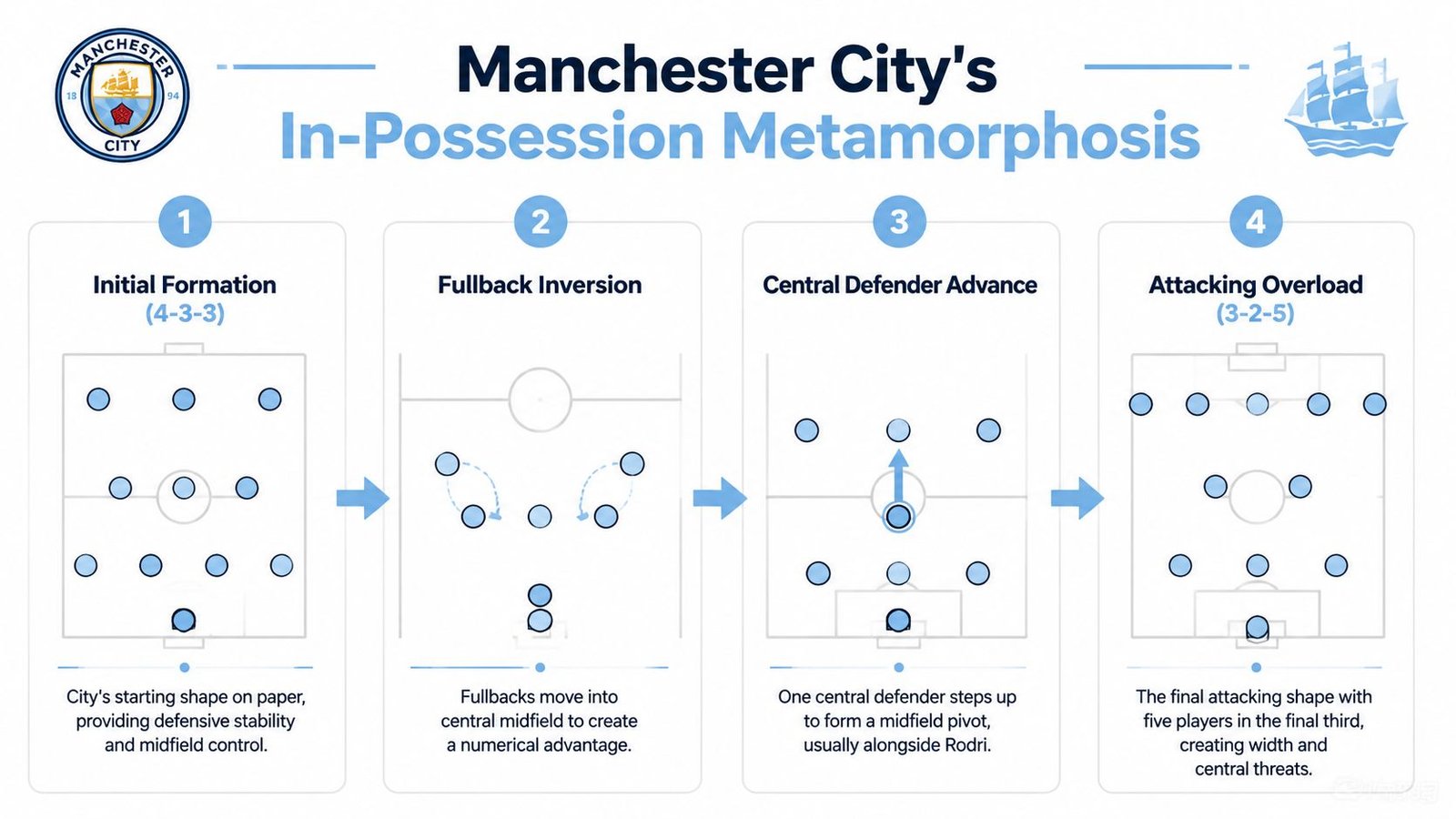
City's identity emerges once possession settles. The nominal back four doesn’t stay flat for long. One defender often joins the next line, another stays wider to preserve circulation, and the front line spreads the pitch so aggressively that the original defensive shape becomes almost irrelevant.
That isn’t just a stylistic observation. In a tactical analysis from The Mastermind Site, City are described as having approximately 66% possession, and that same analysis argues their primary operational shape is a 3-2-4-1 rather than their nominal 4-3-3. The reason is straightforward. If a team has the ball that often, its in-possession structure defines the match more than its defensive starting label does.
How The Back Four Changes Shape
The first shift is usually in the last line and the base of midfield. Instead of keeping four defenders behind the ball, City often leave three in the first line and place two central players ahead of them. That gives the team a stable platform for circulation and immediate counterpressure.
The exact route into that shape can vary:
- An inverting full-back moves inside beside the pivot.
- A center-back steps into a higher lane during progression.
- The far-side full-back may hold width longer or push higher depending on the winger’s position.
These are not isolated movements. They’re linked. When one player narrows, another must preserve width or depth. City’s control comes from how neatly those trade-offs are managed.
Why The 3-2 Base Is So Hard To Press
The 3-2 platform does two jobs at once. It improves access into midfield, and it protects the space behind the ball if the attack breaks down. That’s why the structure has so much tactical value. It isn’t merely about looking modern. It’s about giving the team enough passing angles to progress without exposing itself to one direct counter.
A technically secure squad makes this possible. The same Mastermind analysis connects that structure to recruitment choices such as Manuel Akanji and Mateo Kovacic, players selected to support secure build-up and fluid positional interchange.
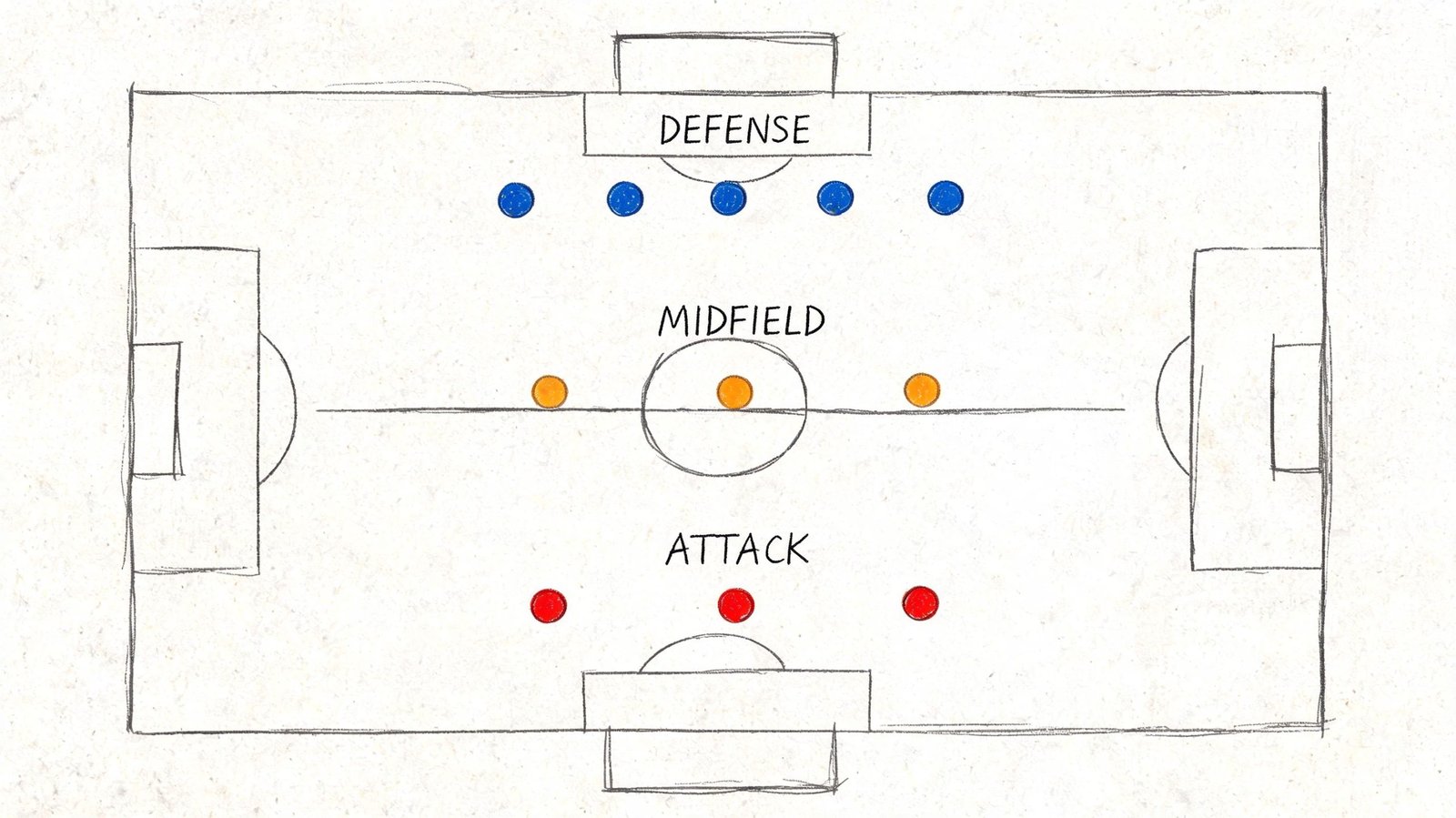
A useful visual sits below.
From 3-2 To The Forward Five
Once City break the first pressure line, the shape stretches further. The front line often becomes a five-player occupation of the width and inner channels. One player pins the right touchline, another the left, one stays central, and two operate in the half-spaces or just off the striker.
That’s why observers often describe City as moving toward a 3-2-5. The distinction between 3-2-4-1 and 3-2-5 depends on how high the attacking midfielder line sits and whether the striker is isolated or connected. In practical terms, both labels point to the same idea. City build with security and attack with breadth.
City’s possession shape is designed to make the next pass easier, not just the current one.
The Hidden Benefit For Defensive Stability
The popular focus is on chance creation, but the more subtle gain is defensive. With three players plus a two-man screen behind the ball, City can collapse around turnovers quickly. That lets their forwards hold more aggressive positions because the rest defense already exists before the attack ends.
For coaches, that’s the key lesson. The best attacking structures don’t gamble blindly. They pre-arrange the first defensive reaction.
PLAYER ROLE MAPS THE ENGINES OF THE SYSTEM
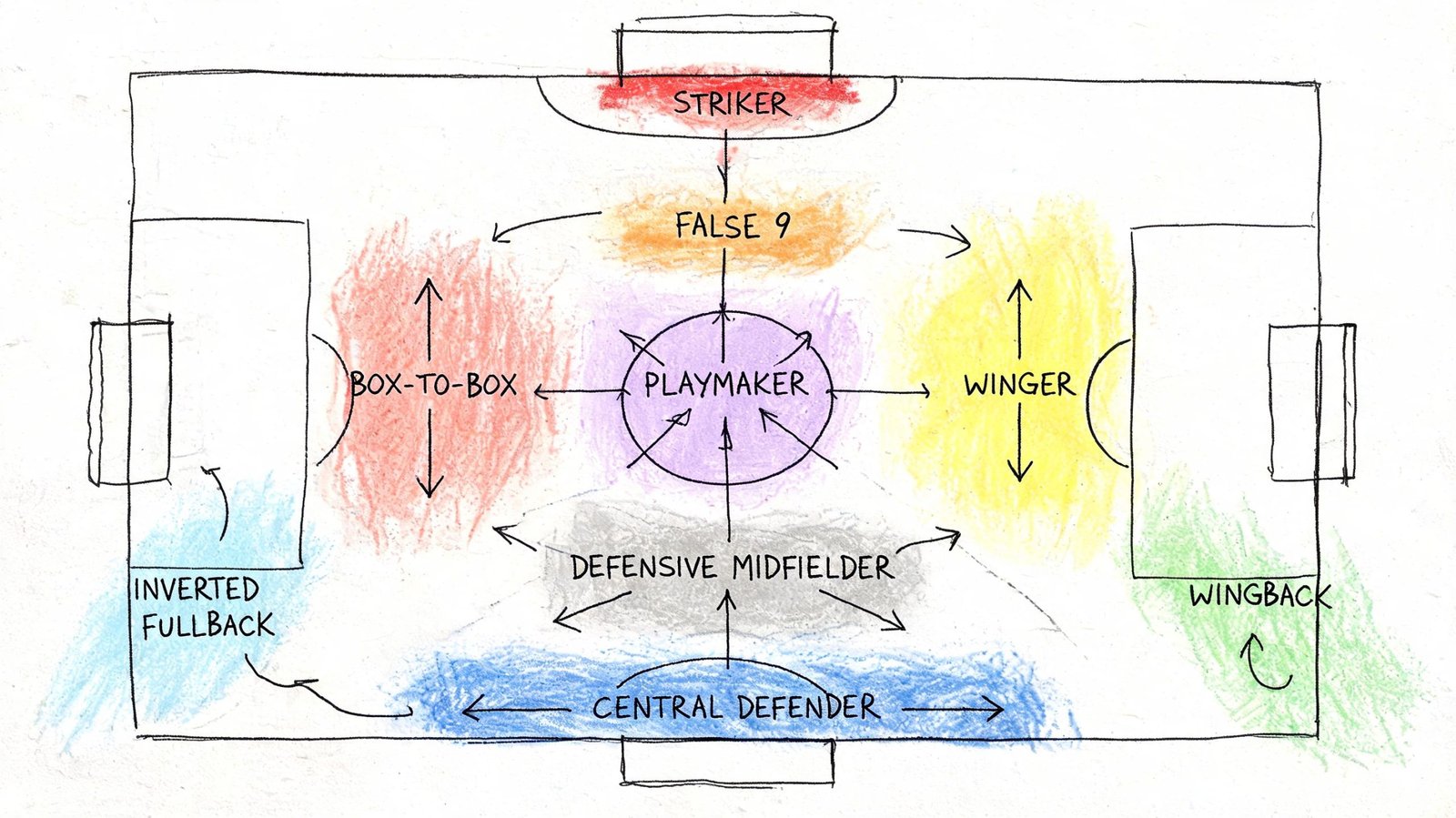
A formation only becomes meaningful when the roles inside it are defined clearly. City’s system works because certain players don’t just occupy zones. They connect phases. They turn a shape change into an advantage before the defense can reset.
For squad projection and role forecasting, this look at how Manchester City could line up next season is useful context. The core tactical point, though, is that the same formation label can mean very different things depending on who performs the role.
The Pivot As The System’s Hinge
The deepest midfielder is the hinge of the manchester city formation. In the single-pivot versions, that player doesn’t only screen counters. He sets tempo, stabilizes spacing, and determines whether City can turn circulation into progression.
The pivot’s body shape is especially important. If he can receive while half-turned, the next line becomes accessible. If he has to play back under pressure, City’s territorial control stalls. That’s why the role isn’t just defensive. It’s architectural.
The Advanced Midfielders As Space Managers
The two higher midfielders often look free, but their freedom is highly structured. They must occupy lanes that support both the winger and the striker without crowding either. One may drop to connect. The other may stay advanced to pin the midfield line. Then they reverse.
Their most valuable actions usually come in these moments:
- Receiving in the half-space: This opens diagonal passing angles into the box or toward the far side.
- Arriving late rather than standing early: Delayed occupation is harder to mark.
- Counterpressing immediately after release: Their starting positions put them close to second balls.
Full-Backs Who Change The Team’s Geometry
The full-backs might be the clearest symbol of Guardiola’s structural thinking. When one moves inside, he doesn’t only add another midfielder. He changes the geometry of the whole possession. The winger can stay wider. The nearest interior can move higher. The center-back can carry forward with a safer passing map around him.
That’s why City’s wide defenders are often evaluated incorrectly if they’re judged only by old full-back standards. Their role is part full-back, part midfielder, part rest-defense organizer.
A City full-back is often chosen less for touchline running than for what his positioning allows everyone else to do.
The Striker And The Wide Threats
The striker’s role is more than finishing. He pins center-backs, threatens depth, and gives the midfield a target that forces the last line to stay honest. That vertical tension creates room for the players underneath to receive.
The wide players have a similarly double-sided brief. They must either hold width to stretch the line or invert at the right moment to attack the inside channel. What matters is less the label of winger and more the timing of their movement relative to the full-back and the near-side midfielder.
A compact role map captures it well:
| Role | Primary function | System effect |
|---|---|---|
| Pivot | Connects build-up and protects center | Maintains continuity between phases |
| Advanced midfielder | Receives between lines and counterpresses | Creates central superiority |
| Inverting full-back | Narrows to support midfield | Enables back-three plus double-screen shape |
| Winger | Stretches or underlaps depending on support | Distorts the back line |
| Striker | Pins defenders and attacks depth | Opens spaces for runners underneath |
When City look effortless, it’s usually because these role relationships are synchronized. The shape then looks fluid without becoming chaotic.
ATTACKING AND DEFENSIVE PHASE BREAKDOWN
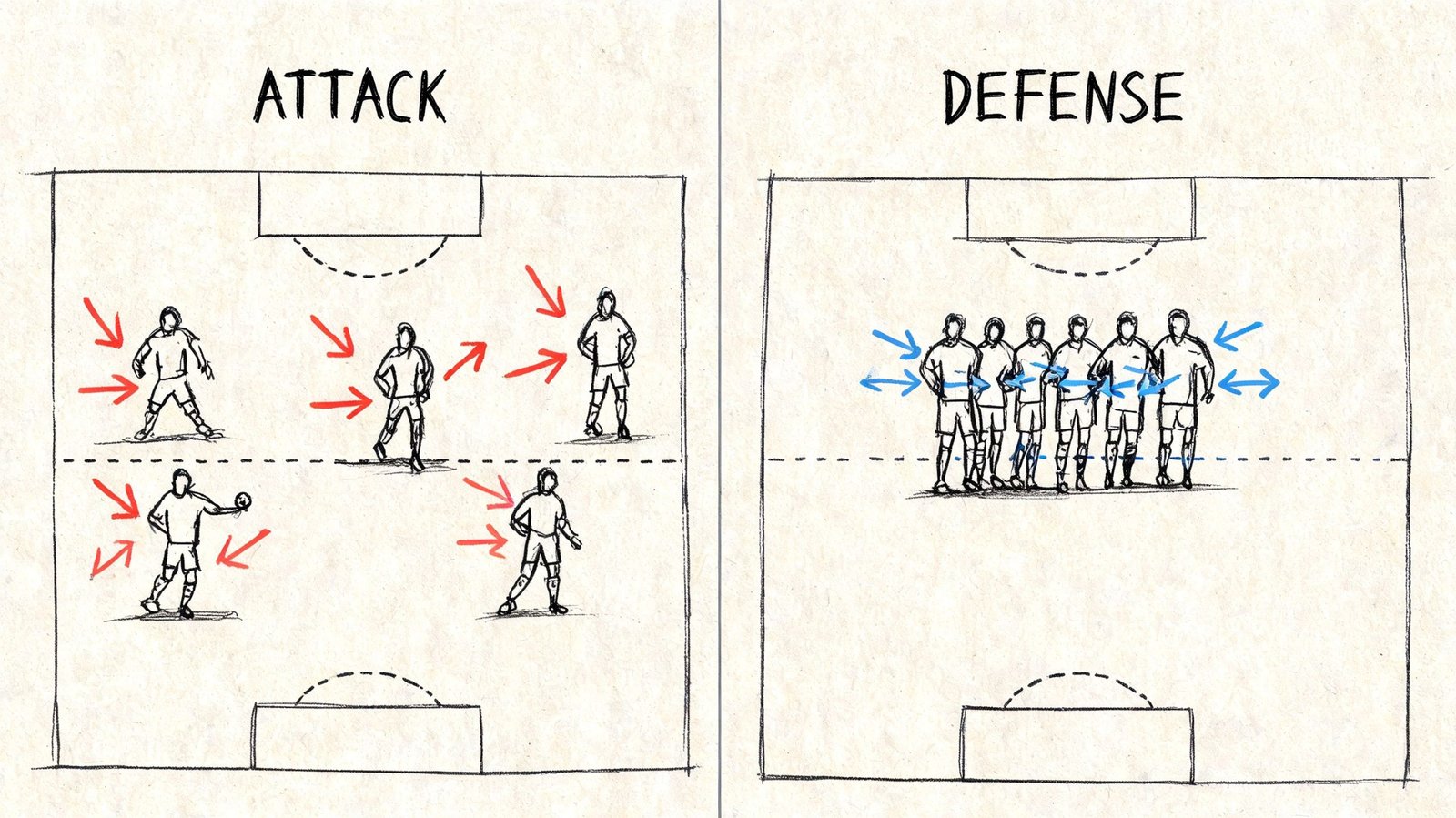
City’s attacking phase is often described as positional play, but that phrase can become vague unless it’s tied to visible behavior. The cleanest description comes from Spielverlagerung’s analysis of Manchester City’s attack, which explains that against a 4-man defense, City creates a positional front 6 by attacking distinct channels and strategically leaving some channels vacant during build-up before filling them later.
That delayed occupation is one of the most important details in the entire system. City don’t always present the final problem immediately. They build toward it.
How The Final Third Occupation Works
Against a back four, the pitch can be read as a set of vertical lanes around and between defenders. City use wide players, interiors, and the striker to threaten those lanes in a way that forces constant decisions. If the full-back jumps wide, the inside lane opens. If the center-back tracks the striker, space appears for a runner underneath.
The significant wrinkle is timing. One or two channels may remain unoccupied in the deeper phase. Then, as the ball advances, a midfielder or winger arrives into that lane late. Defenders are then tracking movement while also adjusting to the ball’s location.
Why The Vacant Channel Matters
Leaving a channel temporarily empty sounds passive. It isn’t. It’s bait.
- It draws the defensive line into a false sense of balance.
- It gives the arriving player a dynamic advantage over a static marker.
- It improves the angle of the next pass because the receiver arrives facing play.
The empty space is part of the structure, not a flaw in it.
What Happens When City Lose The Ball
The defensive phase begins before the turnover. Because City already hold a stable structure behind possession, the first reaction is usually immediate pressure around the ball. The nearest midfielders and full-backs close short options, while the remaining defenders protect the central lane and depth.
If the instant regain doesn’t happen, City can settle into a more compact block. The exact shape depends on personnel and game state, but the logic remains consistent. Central spaces are protected first. Wide access is managed second. The team doesn’t retreat randomly from attack into defense. It folds back along prepared lines.
The Real Link Between Attack And Defense
City’s formation becomes more than a lineup discussion. Their attacking shape is also their first defensive mechanism. The players nearest the ball after loss are already close enough to swarm. The players behind them are already arranged to prevent the clean first pass out.
For fantasy players, that matters because dominant territorial control sustains repeat attacks. For coaches, it’s the larger lesson. A good attacking structure should reduce the cost of losing the ball.
TACTICAL ADAPTATIONS AND RECENT EVOLUTIONS
Manchester City are often discussed as if the system were fixed and the personnel merely interchangeable. The opposite is closer to the truth. Guardiola preserves core principles, but he adjusts the route into them depending on pressure level, opponent block, and available profiles.
Against stronger pressing sides, the attraction of a double-pivot base is obvious. It gives City another secure pass around the first wave and can improve protection if the opponent tries to counter into central space. Against deeper opponents, the team can push more players into advanced lanes earlier because the first-phase risk is lower and the challenge becomes disorganizing a compact block.
The Difference Between Principle And Application
The principle is stable. City want central superiority, clean rest defense, and coordinated occupation of width and half-spaces. The application changes. Sometimes the wide player stays outside longer. Sometimes the full-back becomes the extra midfielder. Sometimes the central defender is the one who advances and changes the arithmetic.
That flexibility is why opponents can recognize the broad idea and still struggle with the exact version they’re facing on the day.
A Recent Player-Led Shift
A particularly interesting recent development appears in a May 2026 context discussed in this video analysis on City’s new inverted winger system. The analysis argues that the reintroduction of a player like Cherki has enabled a 4-2-3-1 base with central overloads through an inverted winger profile.
That matters because it shows how a specific player profile can enable a different tactical pathway inside the same Guardiola framework. The question isn’t only which formation City choose. It’s which players make a particular version of that formation viable.
What That Means Tactically
A winger who can invert naturally, receive under pressure, and combine centrally changes the spacing for everyone around him. The full-back can choose different starting points. The attacking midfielder can rotate wider or run beyond. The striker gets different service angles. The opposing full-back no longer has a simple touchline reference.
Elite tactical shifts often begin with a role profile, not a whiteboard redraw.
That’s the underappreciated part of City’s evolution. Recruitment and availability don’t merely fill slots. They expand the menu of shapes Guardiola can use without sacrificing control.
CONCLUSION COACHING FANTASY AND BETTING TAKEAWAYS
The best way to read the manchester city formation is to stop asking what shape City are and start asking what shape they become in each phase. On paper, the team may begin from a familiar structure. In practice, the decisive features are the shift into a secure in-possession base, the occupation of advanced channels, and the stability behind the ball that allows immediate counterpressure.
For coaches, the transferable lesson is clear. The most useful concept isn’t “copy City’s 4-3-3.” It’s to build a structure where the attacking shape already prepares the defensive response. A box midfield, an inverting full-back, or a delayed half-space run only matter if they connect to the rest of the team’s spacing.
For fantasy players, role beats position. A defender who steps into midfield can become a chance-chain player. A wide forward who holds the last line may receive fewer touches but higher-value ones. A striker in this system benefits from the space created by coordinated occupation around him, not just from isolated service.
For bettors, the practical edge often comes from context rather than reputation. The shape City choose against a high press won’t look the same as the one used against a deep block, and that changes where control, territory, and attacking volume are likely to emerge. Anyone comparing match setups around Arsenal versus City can use resources such as this Bet $50 Arsenal vs City promo as part of pre-match research, but the sharper edge still comes from understanding how City’s structure shifts with the opponent.
For readers who want more of this kind of phase-by-phase tactical detail, Manchester City Analysis offers focused breakdowns on Guardiola’s structure, squad roles, and match-specific adjustments.