
Preseason usually blurs into a sequence of disconnected friendlies. One match is about fitness, another is about commercial obligations, and a third is so heavily rotated that it says almost nothing about how a side will look when the season starts. That's why the Premier League Summer Series deserves a more serious read than standard summer-tour coverage often gives it.
For Manchester City observers, the value isn't in the branding alone. The tournament format creates a tighter competitive environment than a typical exhibition tour, and that changes the kind of clues available to analysts. A short mini-league against Premier League opposition places more weight on role clarity, load distribution, and how quickly tactical ideas can be installed under travel stress. For a squad shaped by Pep Guardiola's detail, that matters.
City weren't among the four clubs in the 2025 edition, but the event still offers a useful model for understanding what a future City participation would mean. It would not solely be a U.S. marketing trip. It would be a preseason stress test that blends football, physiology, and club strategy into one compressed exercise. That's why the tournament is best read through a club-specific lens rather than as a generic fan guide.
Supporters who already follow City's tactical evolution through pieces such as Guardiola's winning philosophy and elite squad structure will recognise the key question. Not “Who won a summer trophy?” but “What can this environment reveal about Guardiola's next version of the team?”
Table of Contents
- INTRODUCTION
- WHAT IS THE PREMIER LEAGUE SUMMER SERIES?
- 2026 TOURNAMENT GUIDE TEAMS SCHEDULE AND HOW TO WATCH
- CITYS PRESEASON LAB TACTICAL PREPARATION AND PLAYER EVALUATION
- LOAD MANAGEMENT BALANCING FITNESS AND COMPETITION
- BEYOND THE PITCH STRATEGIC AND COMMERCIAL IMPLICATIONS FOR CITY
- KEY TAKEAWAYS WHAT TO WATCH FOR FANTASY TIPS AND COACHING INSIGHTS
INTRODUCTION
The Premier League Summer Series sits in a useful middle ground. It isn't a fully serious competition in the way a domestic campaign is, but it also isn't the usual loose collection of friendlies where one side treats the match as conditioning and the other treats it as a public event. That distinction matters when the goal is analysis rather than entertainment.
For a club like Manchester City, a tournament like this would create a cleaner testing environment than most summer schedules. The opponent quality is familiar. The stakes are light but real. The turnaround is quick enough to expose which players absorb instructions rapidly, which units stay coherent under rotation, and which ideas still need training-ground time.
That's the lens that matters most. A City analyst shouldn't read the Premier League Summer Series as a table to follow. The better approach is to treat it as a rehearsal space where tactical tweaks, player pairings, and physical readiness can all be observed under pressure that is low enough to experiment but high enough to matter.
Preseason analysis works best when it separates process from scoreline. The process usually survives into August. The score often doesn't.
The tournament also sharpens a broader question that applies well beyond one week in the United States. How should an elite club weigh football preparation against travel demands, sponsor value, and the economics of a summer event that may carry prestige without guaranteed profit? For City, that trade-off would be especially interesting because the club's standards make every preseason choice strategic.
WHAT IS THE PREMIER LEAGUE SUMMER SERIES?
A Structured Preseason Product
The Premier League Summer Series is a preseason tournament staged in the United States rather than a loose set of one-off friendlies. In the 2025 edition, the competition's second edition, four clubs took part in a round-robin event: Manchester United, West Ham United, AFC Bournemouth and Everton, as outlined in the official Premier League preview of the 2025 Summer Series.
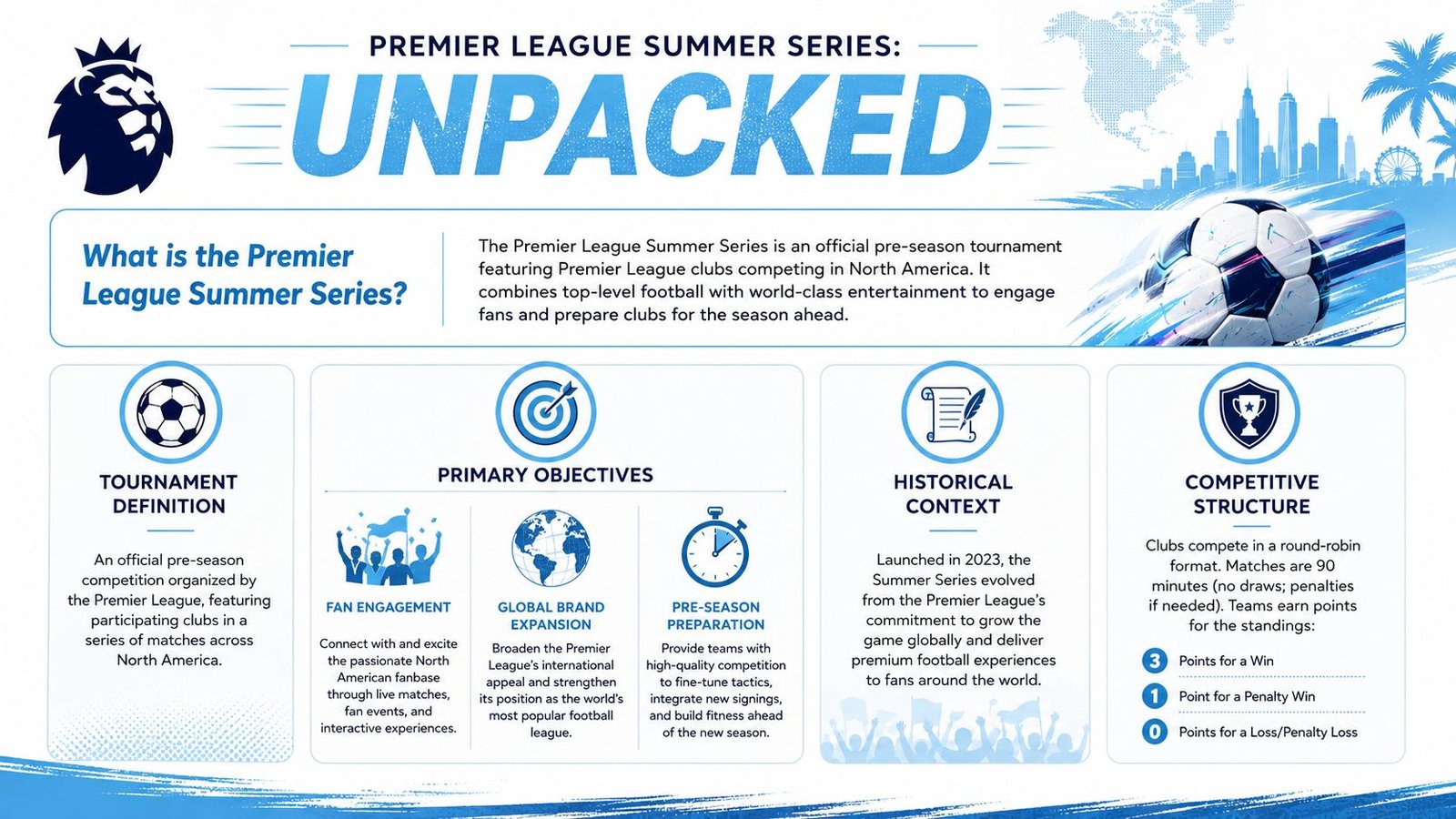
That format changes the feel of the football. Instead of preparing for one isolated opponent and then resetting, clubs have to think in mini-league terms. Squad choices, tempo management and substitutions all sit inside a competitive frame. Even in preseason, that encourages clearer decision-making than a standard tour match often does.
The event also has a recent historical marker that gives it some sporting identity. Manchester United won the 2025 edition with 7 points from 3 matches, and the same Premier League preview notes that the tournament produced 35 goals in nine matches, an average of 3.9 goals per match, which the league described as significantly higher than most pre-season tournaments and above a typical Premier League campaign in scoring rate.
Why the Games Look Different
High-scoring preseason football doesn't automatically mean higher quality football. It often means the structure of the event encourages risk, rotation and looser game states. The Summer Series appears to do exactly that.
A useful way to think about it is through incentives:
- Competitive incentive: Clubs still want to finish top because the event has standings, not just isolated results.
- Tactical incentive: Managers can test ideas against familiar league-level opposition.
- Commercial incentive: The Premier League gets a concentrated U.S. showcase with recognisable clubs and repeat matchdays.
A separate standings reference from FootyStats' 2025 Summer Series table shows how tight the mini-league was. Manchester United finished first on 7 points, West Ham second on 6, Bournemouth third on 3, and Everton fourth on 1. That means the top two were separated by only 1 point, which is another reminder that the competition isn't just ceremonial.
Practical rule: A tournament becomes analytically useful when the participants have at least some reason to care about the result.
For Manchester City analysis, the important lesson isn't that goals arrive in volume. It's that the tournament creates a hybrid environment. It is part preparation camp, part standings-based competition, and part international brand exercise. That mix produces clues, but only if they're interpreted with discipline.
2026 TOURNAMENT GUIDE TEAMS SCHEDULE AND HOW TO WATCH
What Can Be Said with Confidence
There isn't verified fixture, team, or broadcast information available here for a 2026 edition, so any specific club list, kick-off time, or TV detail would be guesswork. That would be the wrong way to read the tournament anyway. The facts that are secure come from the most recent verified format.
The Summer Series is a compact preseason event built around four clubs, six matches, and three U.S. host cities, with the 2025 schedule running between late July and early August in New Jersey, Chicago, and Atlanta, according to Sky Sports' 2025 Summer Series schedule guide. That structure matters more than any single kickoff listing because it defines how clubs prepare.
For Manchester City supporters trying to anticipate what a future involvement would mean, the useful expectation is not a leisurely tour. It is a compressed travel-and-match sequence. That creates a very specific kind of preseason: one where sessions between games become short, highly selective, and often more focused on tactical reminders and recovery than heavy installation work.
What Fans Should Track Before Fixtures Drop
When official details for any future edition are released, these are the practical points worth checking first:
- Participating clubs: The opponent mix determines whether the event is useful for direct league-style comparisons or better treated as broad conditioning work.
- Host-city sequence: Travel order often tells more about the physical challenge than the names on the fixture list.
- Broadcast arrangements: Fans following tactical details need full-match access, not highlight packages.
A fan guide should also flag what not to overstate. In an event like this, the schedule itself is part of the story. A team might look sharp in one match and leggy in the next for reasons tied less to football quality than to where it is in the travel and recovery cycle.
A short decision table helps frame it:
| What supporters look for | What it actually indicates |
|---|---|
| Strong combinations in possession | Promising early chemistry |
| Heavy rotation | Load management, not indecision |
| Inconsistent pressing | Fitness stage or role experimentation |
| Aggressive scoreline chasing | Tournament incentive, not always season preview |
That's the right baseline for 2026. Wait for official confirmation on teams and viewing options, then interpret the calendar as part of the football story rather than background admin.
CITYS PRESEASON LAB TACTICAL PREPARATION AND PLAYER EVALUATION
Why Guardiola Would Treat It as a Lab
For Manchester City, the Premier League Summer Series would be most useful as a controlled tactical lab. Premier League opponents remove some of the noise that comes with facing unfamiliar styles from other leagues, while preseason conditions still give Guardiola room to test structures that might be too risky in competitive fixtures.
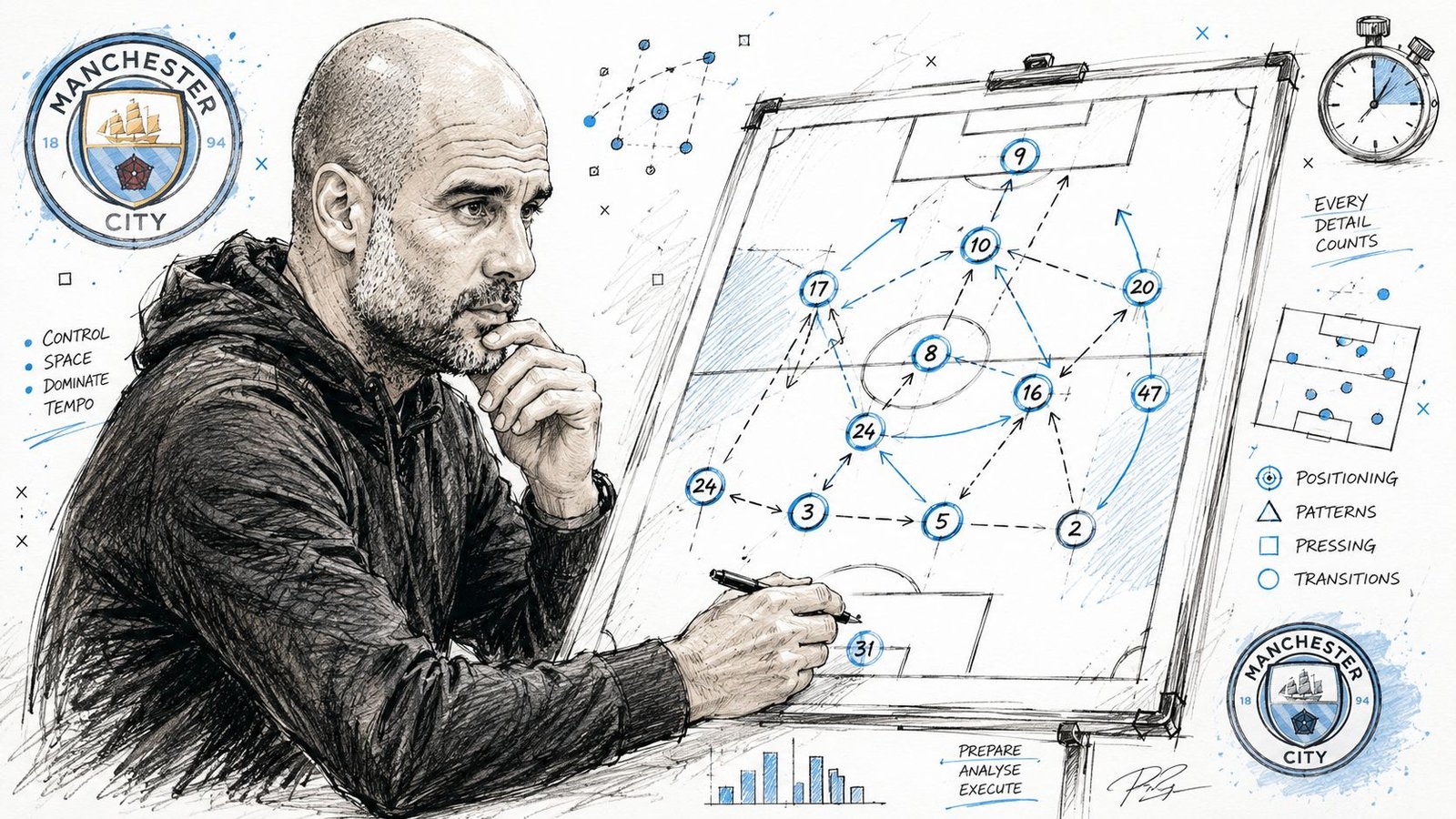
The first layer of analysis would be structural. City staff would likely study where the full-backs start, whether the rest defence holds its shape during more aggressive attacking phases, and how midfield roles shift when lineups are mixed between established starters and developmental options. Those details usually reveal more than possession totals or final scores.
The second layer would be individual. A tournament like this is ideal for assessing players whose status isn't fully settled. That can include academy graduates, returning loanees, or senior squad members being trialled in adjusted roles. In that context, a player isn't only being judged on output. The staff are watching timing, spacing, scanning, and how well instructions survive fatigue.
A useful parallel sits in broader formation analysis such as this breakdown of the 4-2-3-1 structure and its role demands. Even when City don't line up in a textbook version of that shape, preseason often exposes the role logic underneath the formation card. Who drops? Who pins the line? Who protects the transition lane? Those are the key questions.
What Analysts Should Actually Watch
A strong preseason read on City would focus on patterns, not headlines.
- Build-up access: Which players can receive under pressure and move the ball through the first line without slowing the attack?
- Counterpress behaviour: How quickly does the nearest unit react after possession is lost?
- Box occupation: Are the wide players, attacking midfielders, and full-backs arriving in balanced lanes or crowding the same zones?
- Defensive spacing: Does the back line stay connected when mixed units play together?
That sort of clip-based viewing says more than whether one player scored twice against a tired opponent.
The tactical angle also has to be tempered by context. The Premier League Summer Series schedule explainer notes that each club plays only three fixtures across three venues in eight days, and that the competition uses goal difference as the first tiebreaker. That does two important things. It limits the sample for firm tactical conclusions, and it can encourage teams to chase margins in ways that distort normal in-game choices.
A preseason game can show what a coach wants. It can't always show what the team will be once the league begins.
Here, video work becomes more useful than summary judgment.
Why Results Can Mislead
A team can look fluid because the opponent rotated heavily. Another can look disjointed because the manager loaded one half with prospects and the next with senior players who haven't built rhythm yet. In a tournament where standings matter, scorelines can also be inflated by late-game chasing.
For City, the most revealing signs would usually be these:
- Whether the central defenders can hold rest-defence positions without the usual first-choice midfield shield.
- Whether a younger winger understands pressing triggers, not just dribbling moments.
- Whether a hybrid full-back role still functions when the surrounding personnel changes.
Those are squad-building questions. The Summer Series would help answer them, but only partly. Analysts who treat it as definitive evidence would be asking too much of three matches.
LOAD MANAGEMENT BALANCING FITNESS AND COMPETITION
The Real Challenge Is Sequence Not Intensity Alone
The hardest part of a tournament like the Premier League Summer Series isn't any single match. It's the sequence. Travel, climate change, hotel routines, and a compressed rhythm of preparation create a different physical problem from a home-based preseason block.
For Manchester City, the performance staff would likely treat this as a calibration exercise rather than a pure conditioning camp. Players need enough match exposure to sharpen decision-making at speed, but they also need protection from the sort of overload that leaves August legs heavy rather than fresh. That means intensity can't be judged in isolation. It has to be judged against recovery opportunities and the timing of the competitive season.
A useful outside reference for the broader principles involved is this guide to an exercise and workout platform that emphasises structured progression and session planning. Elite football uses a far more specialized system, but the underlying point still applies. Fitness gains don't come from adding stress alone. They come from placing the right stress in the right order.
How City Would Likely Distribute Minutes
A likely City approach in this setting would be layered rather than uniform. Established starters might get shorter controlled appearances early, then a more realistic workload later in the week. Fringe players could get the reverse, especially if the staff need evidence on positional versatility or readiness for senior squad minutes.
The key variables would include:
- Starter integration: Senior players often need rhythm with likely league partners, not just raw minutes.
- Return-to-play management: Anyone coming back from a disrupted period needs a progression model, not a simple “fit or unfit” binary.
- Travel tolerance: Some players respond well to repeated travel stress. Others need more careful management around sleep, hydration, and soft-tissue risk.
Load principle: The useful question isn't who played the most. It's whether each player got the right kind of minutes for their stage of preparation.
That's why rotation in this tournament shouldn't be read as uncertainty. It's more often evidence of planning. For City, that planning would also connect to broader squad resilience themes similar to those discussed in analysis of the return of key players and what it means for squad depth. Preseason minutes are rarely about one game. They're about building enough availability and adaptability to survive the first competitive block.
A sharp analyst reading City in this environment would therefore track substitution timing, role changes after the break, and whether players are asked to repeat high-speed actions or hold structure. Those choices usually reveal the conditioning objective.
BEYOND THE PITCH STRATEGIC AND COMMERCIAL IMPLICATIONS FOR CITY
Why Clubs Still Go
From City's perspective, the commercial logic of the Premier League Summer Series would be easy to understand. The United States is a major audience market. A compact tournament offers sponsor visibility, media access, hospitality opportunities, and direct supporter engagement without the logistical sprawl of a longer tour.
That matters because preseason isn't only about football preparation. It's one of the few points in the calendar where a club can place first-team players, club identity, and commercial partners in the same public frame. For an organisation with global ambitions, that has obvious strategic value.
It also creates softer football benefits. A club's profile in a market influences everything from youth affinity to media framing and the strength of future brand activations. None of that turns one summer match into profit on its own, but it can still justify the trip if the club sees North America as a long-term audience priority.
For readers interested in the physical side of travel-heavy schedules, practical resources on effective strategies for athlete recovery are useful background because commercial tours only work if performance staff can limit the physical cost of all the off-pitch obligations attached to them.
The Contrarian View on Sustainability
The under-discussed question is whether the event is a sound repeatable product on its own terms. That's where the most interesting evidence appears. SportsPro's July 2025 report on club pressure around the Summer Series said the Premier League could face pressure from clubs to scrap the event, citing failures to consistently sell out stadiums and a reported UK£5.4 million net loss in 2023. The same report said the 2025 edition was also expected to lose money, though less than before.
That changes the analytical frame. The event may not be best understood as a profit centre at all. It may function more like a strategic loss leader, where the league and participating clubs accept short-term financial weakness in exchange for longer-term brand growth and market presence.
A simple comparison makes the choice clearer:
| If the priority is | The Summer Series offers |
|---|---|
| Direct short-term profit | A less convincing case |
| Brand exposure in North America | A much stronger case |
| Competitive certainty before the season | Only limited value |
| Stress-testing operations and squad management | Significant value |
For Manchester City, that trade-off would be especially sharp. The club already operates at a level where marginal gains in tactical preparation matter, but so does global positioning. A tournament like this would only make sense if both departments could extract value from it. If the football side sees a useful test environment and the commercial side sees a meaningful market opportunity, the trip works. If either side doesn't, the cost becomes harder to justify.
KEY TAKEAWAYS WHAT TO WATCH FOR FANTASY TIPS AND COACHING INSIGHTS
For City Supporters
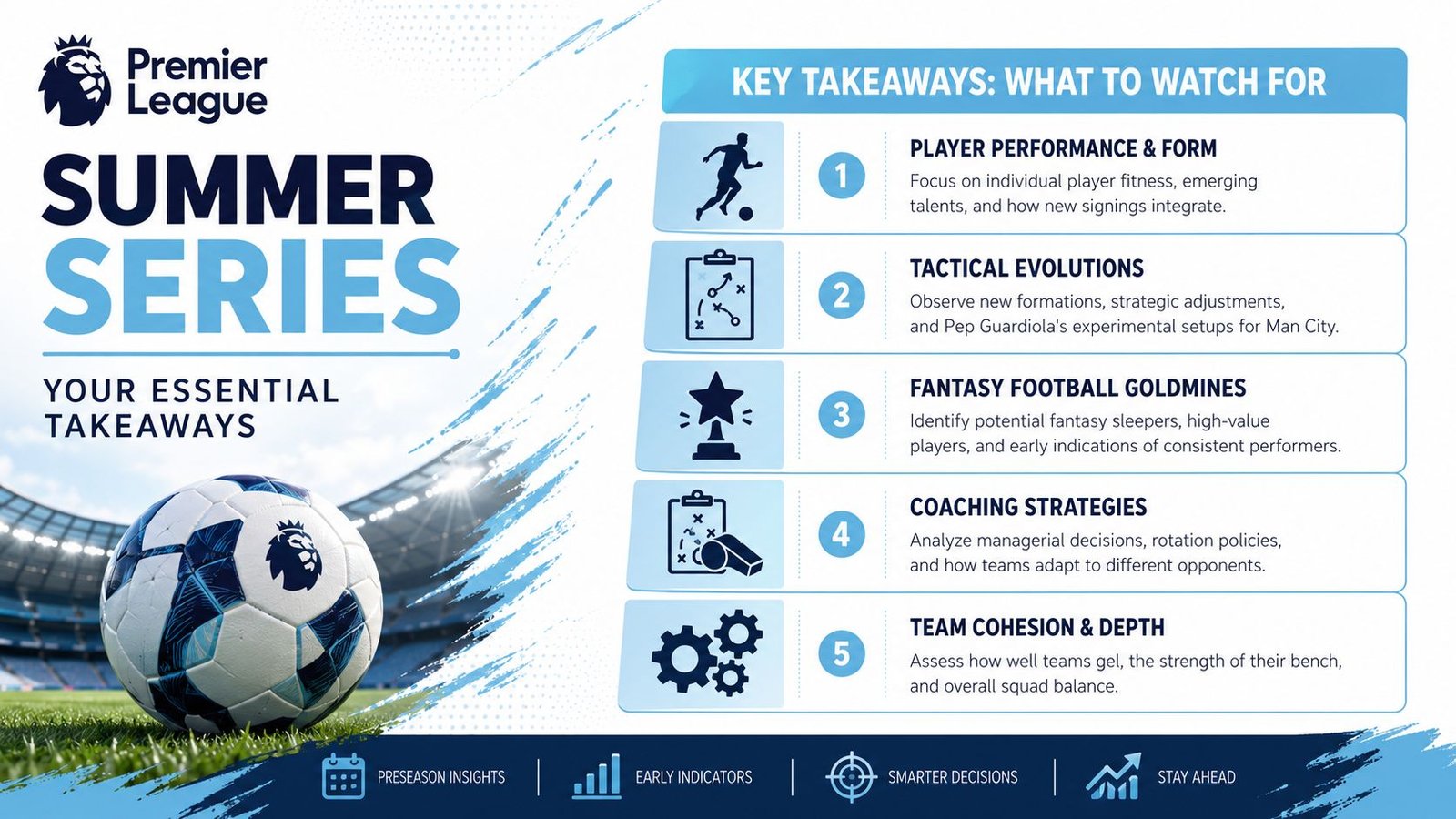
The sharpest way to watch a future City appearance in the Premier League Summer Series is to ignore the temptation to treat it like a league table in miniature. The useful clues sit in role definition, combinations between units, and which players Guardiola trusts in structurally sensitive positions.
Supporters should pay closest attention to these signs:
- Midfield control: Which player anchors circulation when the usual first-choice triangle is broken up?
- Wide-role discipline: Do the wingers hold width at the right moments or drift too early inside?
- Defensive balance: Can City keep a stable rest-defence shape when full-backs invert or rotate?
For Fantasy Players and Match Watchers
Preseason can tempt overreaction. A scorer in one open summer game may still start the season on the bench. What matters more is repeatability.
Better fantasy indicators include:
- Minutes with strong teammates
- Set-piece involvement
- Penalty-box positioning
- Whether a player appears in more than one tactical draft
That gives a more stable signal than chasing a headline performance from a chaotic match state.
For Coaches and Analysts
The tournament is most useful when treated as a decision environment. Coaches can observe how a team responds to travel, short turnarounds, and partial tactical installation. Analysts can separate consistent behaviours from preseason noise.
The best preseason competitions don't predict the season. They reveal which ideas are ready to survive it.
The Premier League Summer Series is valuable for exactly that reason. Through a Manchester City lens, it isn't mainly about silverware, spectacle, or marketing copy. It is a compact test of tactical flexibility, squad depth, and organisational priorities under real-world pressure.
Manchester City supporters who want more of this kind of evidence-led tactical reading can find deeper match breakdowns, squad analysis, and opinion at Manchester City Analysis.