
A City match has just finished. The timeline says control, the scoreline says tension, and the post-match talking points are already drifting toward the obvious. Possession was high. Territory looked dominant. A few clips are circulating. None of that yet explains why Manchester City pinned one opponent in place, or why another side kept escaping the press and reaching the box with too little resistance.
That's the gap the best football statistics sites need to close. Good tools don't just collect numbers. They help analysts and writers connect actions, spaces, and patterns into something coherent enough to publish or present. For Manchester City coverage, that usually means answering a more demanding set of questions. Which build-up lane was open? Which defender was targeted? Which midfielder carried the load when the structure changed? Which warning signs were visible before the result turned?
The market is crowded with dashboards, score apps, scouting suites, and public databases. Some are excellent for live monitoring but weak for deeper work. Others are powerful but too expensive or too heavy for a fast editorial workflow. This guide ranks the best football statistics sites as a working stack, not just a beauty contest. The aim is simple. Help analysts, coaches, and football writers move from raw numbers to sharper tactical narratives.
Table of Contents
- 1. Hudl Wyscout
- 2. Hudl StatsBomb
- 3. The Analyst
- 4. Premier League Official Stats
- 5. WhoScored
- 6. SofaScore
- 7. FotMob
- 8. Understat
- 9. Transfermarkt
- 10. FBref
- Top 10 Football Statistics Sites Comparison
- BUILDING YOUR ANALYTICAL TOOLKIT
1. Hudl Wyscout
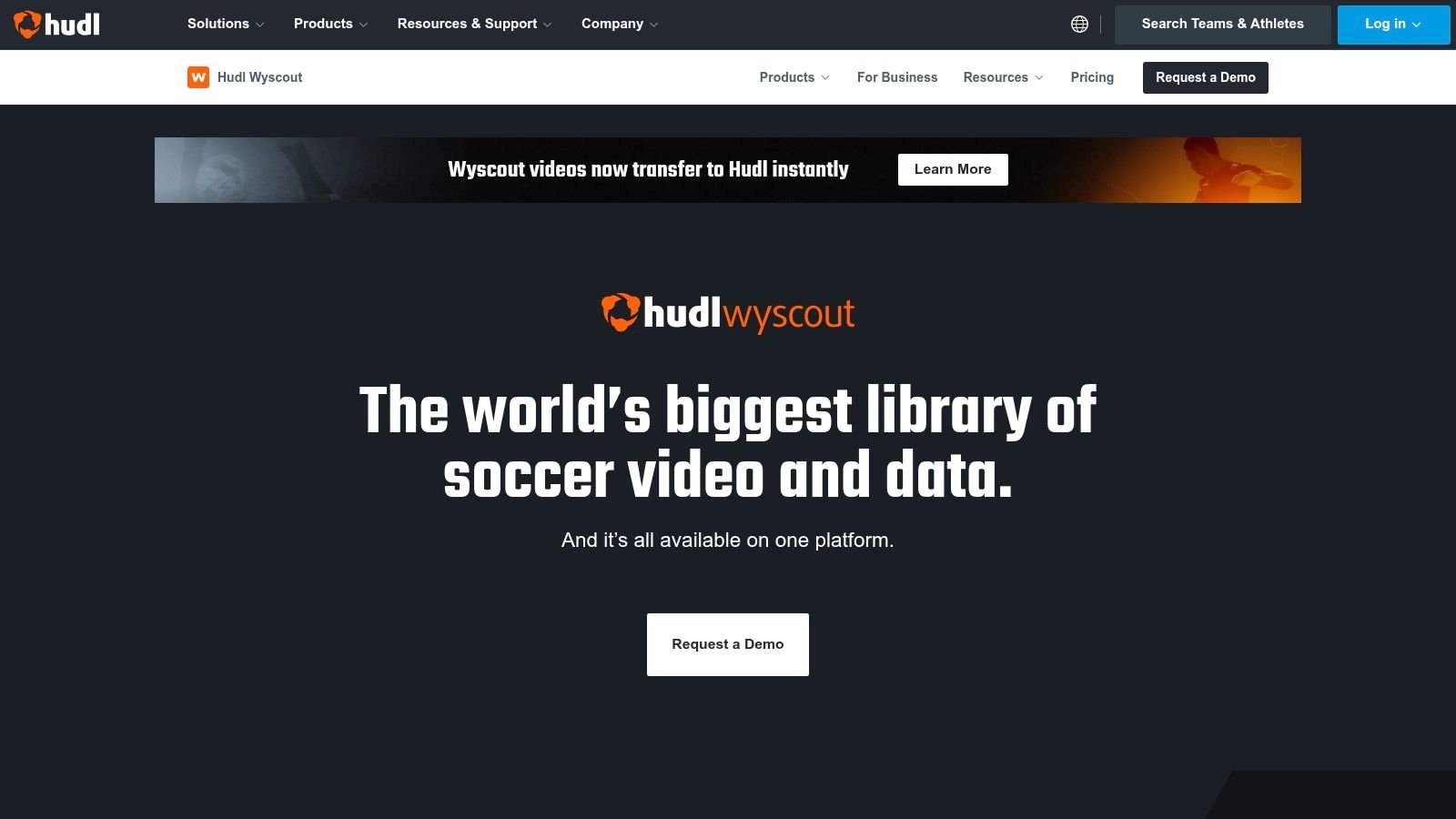
Hudl Wyscout remains the strongest all-round platform for serious football analysis because it solves the main practical problem faster than almost anything else. It ties video to tagged actions well enough that an analyst can move from question to evidence without losing time. That matters when breaking down a Manchester City match where the answer is rarely in one clip or one stat line.
For opposition work, Wyscout is especially useful because it keeps the workflow connected. A writer can isolate an opponent's build-up patterns, collect examples of how they defend cut-backs, then pull clips that show whether City's wide rotations are likely to drag them out of shape. The platform is deep, but its greatest strength is how quickly it turns film review into something shareable.
Why It Sits At The Top
Its match library, player indexing, playlist tools, filters, reporting features, and broader ecosystem make it hard to replace with a patchwork of free products. That doesn't mean it's perfect. The interface can feel dense at first, and quote-based pricing puts it out of reach for many solo writers.
- Best for clip-led analysis: Tagged events and downloadable clips make tactical arguments easier to support.
- Best for opposition prep: Filters help analysts narrow matches, actions, and player tendencies quickly.
- Weakest point for independents: Cost is the obvious barrier, especially if the need is occasional rather than daily.
Practical rule: If the finished output needs video proof, not just statistical support, Wyscout usually earns the tab space first.
2. Hudl StatsBomb
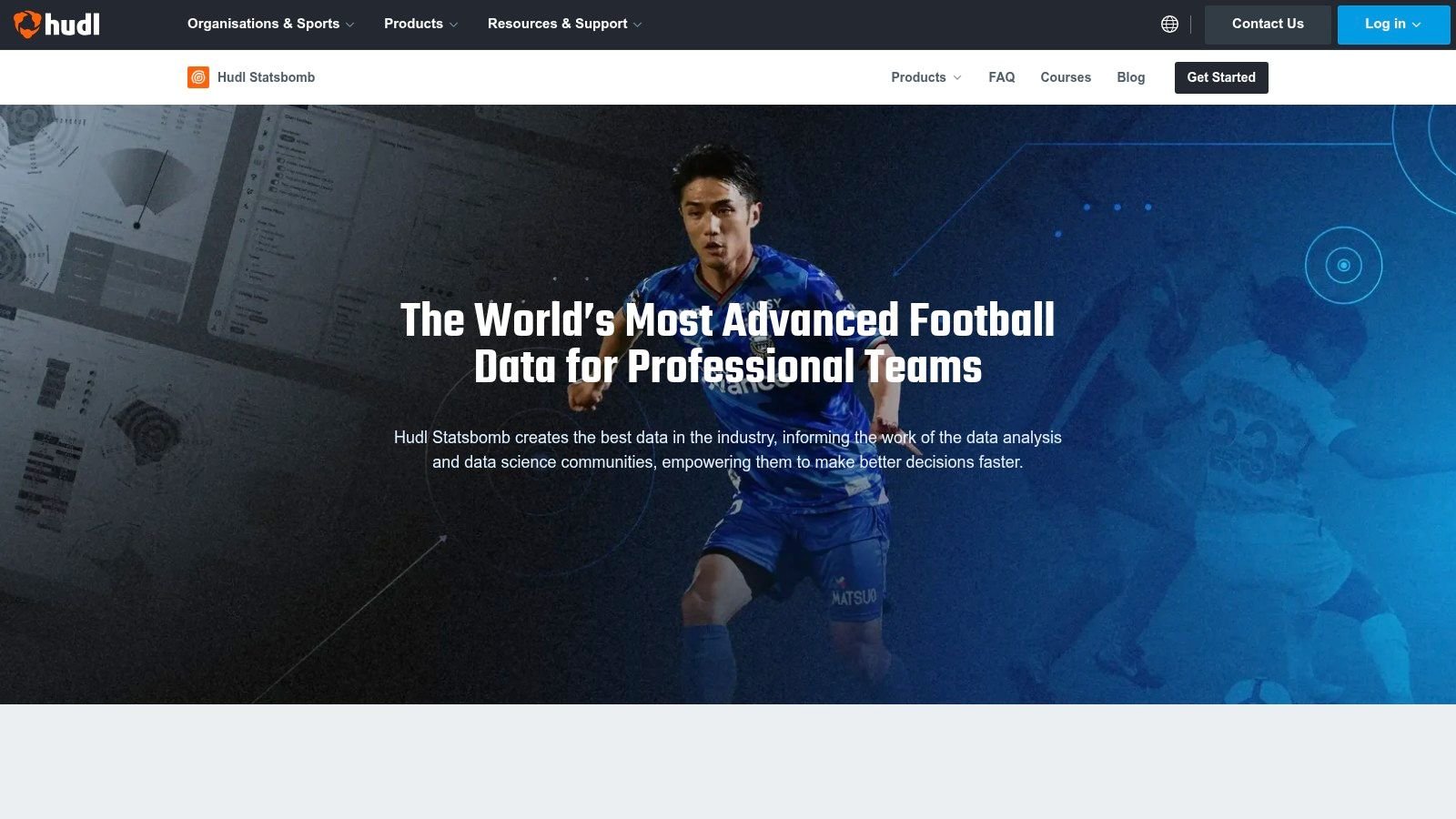
Hudl StatsBomb is where many tactical narratives become sharper. Its enterprise tools, especially IQ and IQ Live, are built for people who need more than surface-level event counts. Pressures, richer shot context, and more detailed event structure make a difference when the analysis concerns why City's press clicked in one phase and failed in another.
That richer event layer is useful for shape analysis too. When Manchester City shift between structures in and out of possession, the story often isn't visible in a basic passing table. It becomes clearer when pressure actions, shot context, and defensive responses are mapped against the tactical framework, including structures discussed in this 4-2-3-1 formation analysis.
Where It Changes The Quality Of Analysis
StatsBomb also deserves credit for lowering the barrier through its open data offering and technical tooling. That makes it one of the few premium-grade names that still supports experimentation, teaching, and prototype work without forcing everyone into a commercial agreement from day one.
The trade-off is straightforward. Full access is commercial, and the free side doesn't match paid breadth. Still, for anyone building a workflow around pressing, shot quality, or set-play detail, this is one of the best football statistics sites to learn in depth rather than browse casually.
For tactical storytelling, detailed event schema beats attractive dashboards almost every time.
3. The Analyst
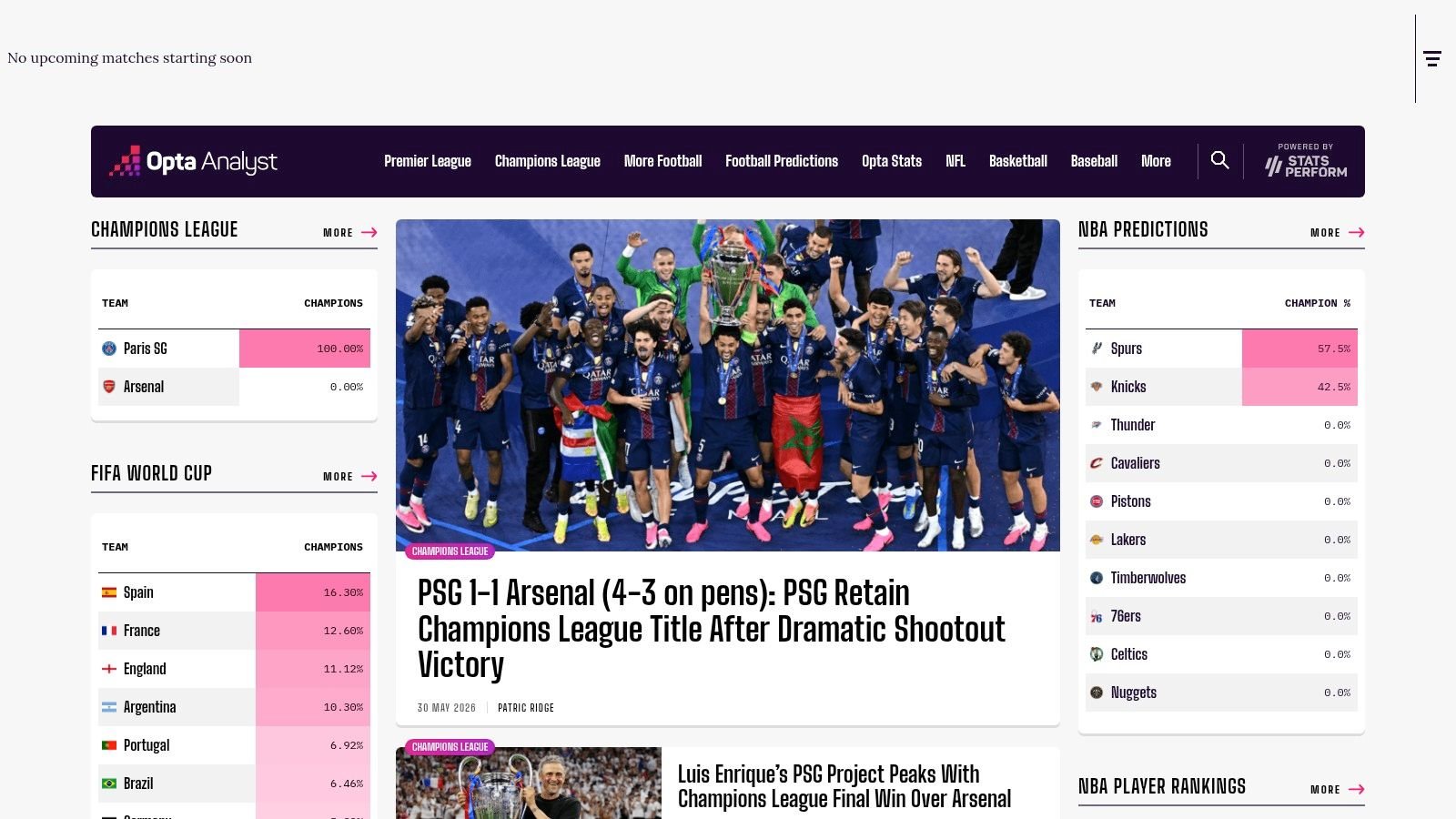
The Analyst works differently from most tools on this list. It isn't primarily a sandbox for custom exploration. It's an editorial platform that translates Opta-backed data into readable analysis, visual explainers, and useful framing. For football writers covering Manchester City, that makes it valuable at the interpretation stage.
A common problem in football content is that the raw information is decent, but the framing is weak. The Analyst helps solve that by showing how official metrics can be turned into narratives people follow. Its charts, article structure, and subject selection are worth studying even when the underlying topic isn't Manchester City.
Best Use In A Writing Workflow
This site is strongest when a piece needs context, language, and presentational cues. It's less useful when the task is to run custom filters or compare niche subsets of actions across a large sample. In that sense, it complements deeper tools rather than replacing them.
- Use it for framing: It helps shape angles around form, player roles, and trend-based stories.
- Use it for presentation reference: Its visual communication is often cleaner than what analysts build in a hurry.
- Don't use it as a primary database: It isn't designed for heavy querying or bespoke scouting filters.
For editorial teams, it's one of the best football statistics sites to keep open when drafting headlines, intros, and stat-backed explainers.
4. Premier League Official Stats
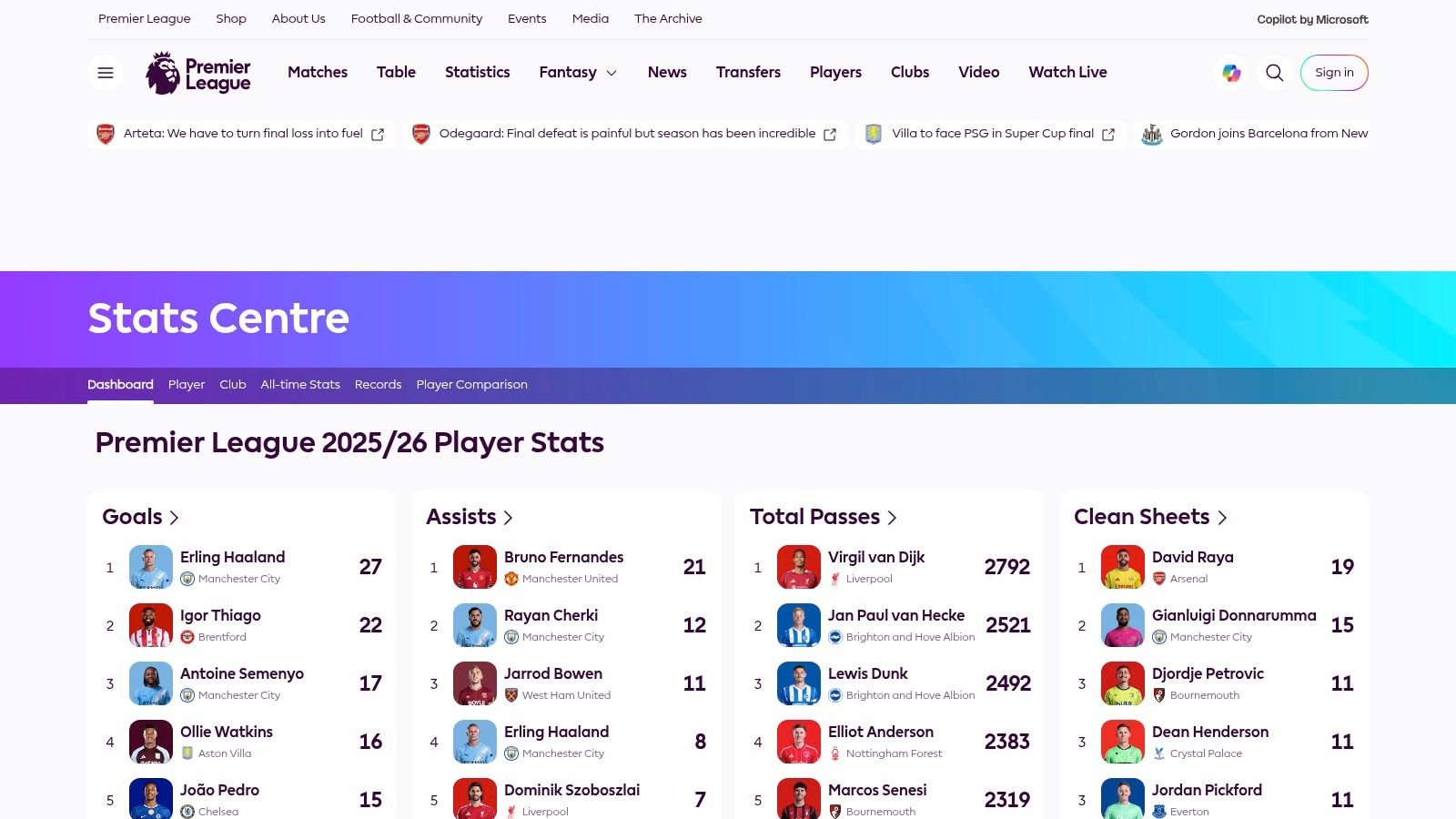
There's a simple reason to keep Premier League Official Stats in the workflow. When the piece needs a definitive Premier League reference, this is the cleanest place to start. It's particularly useful for Manchester City coverage that needs competition-specific context rather than cross-league comparison.
Writers often overcomplicate this part of the job. If the claim is about league records, seasonal leaders, or standard metric definitions inside the Premier League environment, the official database is usually safer than relying on secondary summaries. It also helps avoid one of the most common errors in football writing, which is mixing model-based numbers with official competition stats as if they were interchangeable.
When Official Competition Data Matters Most
This platform is narrow by design. That's both the benefit and the limitation. It won't satisfy a broader Champions League or multi-league scouting task, and it isn't built for advanced modeling.
Official competition data is best used as the anchor, then expanded with specialist tools when the tactical question gets more demanding.
For Manchester City analysts, this makes it especially strong for historical baselines. If a story starts with “How unusual is this Premier League trend?” this is a better first stop than a flashy live-score app.
5. WhoScored
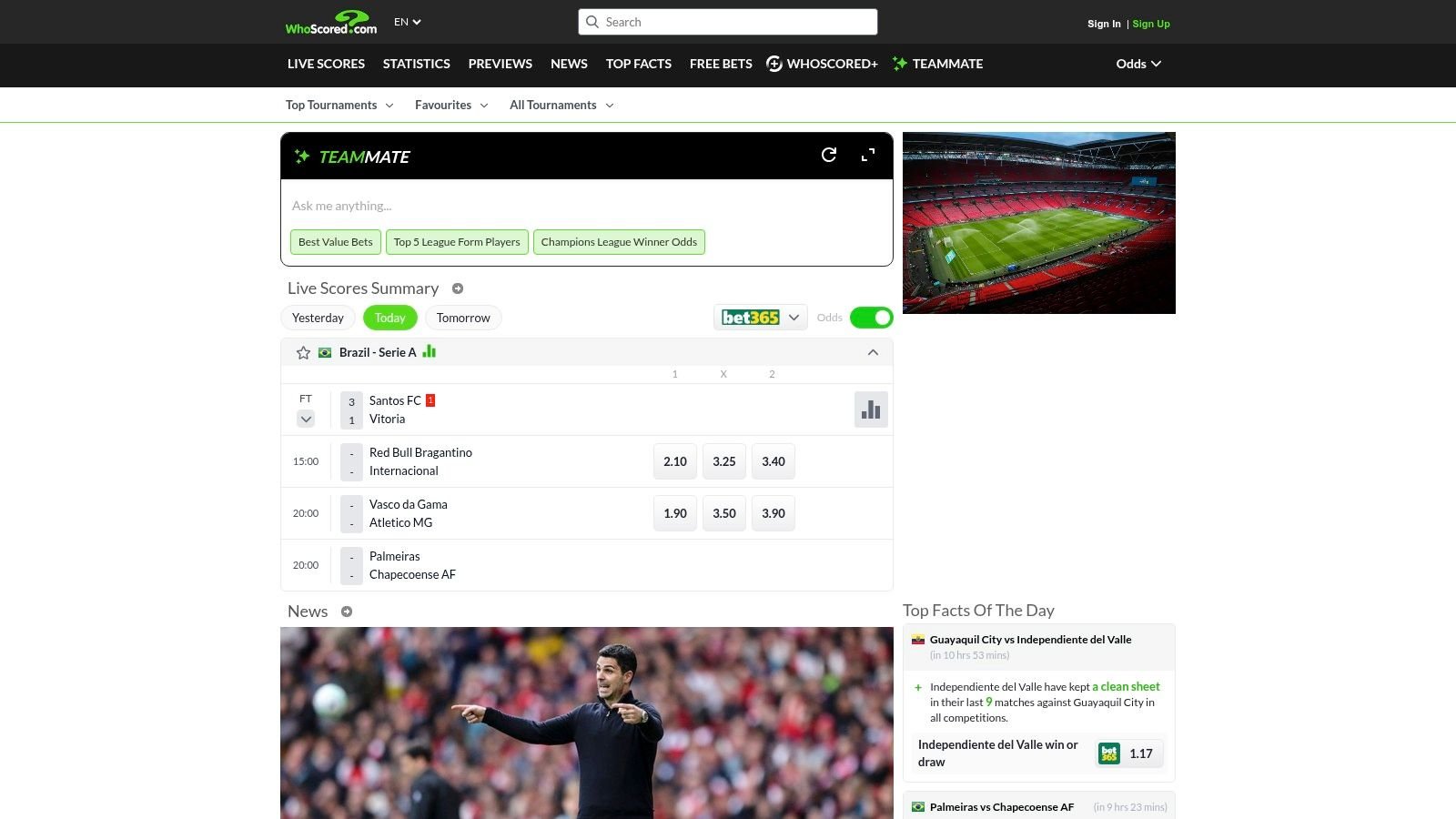
WhoScored still matters because it solves a very practical problem. It gives fast, free, public-facing context without forcing the user into a fully professional stack. Its long-standing coverage includes the Premier League, Serie A, La Liga, Bundesliga, Ligue 1, and other top leagues, which is a major reason it remains a common reference point in football analysis and media work, as shown on WhoScored's statistics pages.
That cross-league consistency is useful when Manchester City coverage spills into transfer reporting, opponent scouting, or stylistic comparisons with players outside England. The site also has enough familiar structure that readers understand it immediately, which matters when a piece needs accessible evidence rather than proprietary complexity.
Why It Still Earns A Place
A more technical reason to keep WhoScored in the stack is event-level match data. McKay Johns highlights that event granularity as the feature that sets it apart from many other free football sites in his guide to free football data. That's a meaningful distinction for anyone mapping passing actions, possessions, or pressing patterns rather than reading team summaries.
The downside is also well known. The player ratings are useful as flags, not verdicts. They can point analysts toward a performance worth rewatching, but they shouldn't carry the full argument on their own.
- Best as a free scanner: Good for early pattern spotting and public-facing references.
- Less reliable as a final judge: Ratings simplify complex roles too aggressively.
- Strongest use case: Match prep, watchlists, and quick team-style orientation.
6. SofaScore
SofaScore is one of the fastest tools for live match consumption, and that speed explains its popularity. During a City match, it can give a writer immediate visual cues through heatmaps, shot maps, momentum-style timelines, and player pages that update quickly enough to support live notes.
Its strength isn't depth in the professional sense. It's speed plus readability. When a match swings and the immediate question is where pressure is building or which flank is carrying the threat, SofaScore often answers fast enough to guide the next rewatch.
Best Role On Matchday
This is a companion tool, not a full research environment. It's useful before the deep work begins, and useful again when a piece needs a clear visual shortcut for readers who don't want to stare at dense event logs.
That's why it works well for fast-turnaround Manchester City analysis. The platform is broad, mobile-friendly, and visually intuitive. The trade-off is obvious. Analysts who need exportable data, custom querying, or rigorous back-end transparency will hit the ceiling quickly.
Use SofaScore to notice the pattern. Use another tool to prove it.
7. FotMob
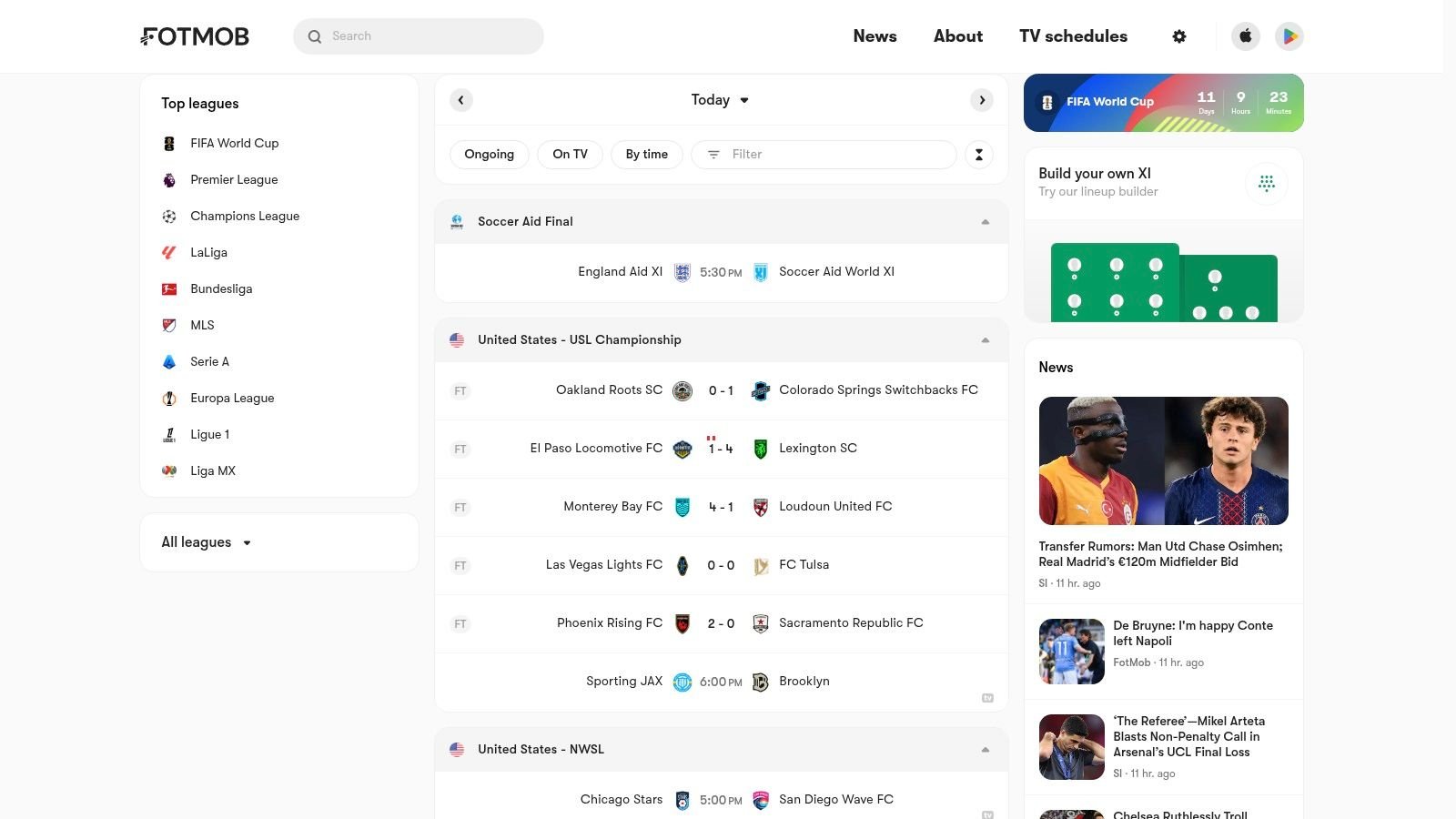
FotMob is one of the cleanest options for match-centred workflows. It handles the daily reality of football writing well. Fixtures, lineups, ratings, match stats, xG displays, and news are presented in a way that supports quick decisions instead of slowing them down.
For Manchester City coverage, that matters most on busy schedules. Midweek European football, league matches, injury noise, and rotation all demand a tool that helps an analyst orient quickly. FotMob's interface does that better than many more ambitious products because it doesn't bury the match in too many side paths.
Where It Helps Most
Its main value is post-match turnaround. A writer can move from lineup confirmation to shot map, then into player pages and form references with very little friction. That makes it useful when drafting immediate reaction pieces or building the first outline before deeper work begins.
The limitation is that it isn't a research database. It doesn't pretend to be one, and that honesty is part of its appeal. For broader modeling, custom exports, or historical deep dives, another platform has to take over.
- Strong for daily use: Fast navigation makes it easy to check a lot without losing the thread.
- Strong for editorial planning: TV listings and match-centred layout help coverage prep.
- Weak for bespoke analysis: Serious data extraction isn't really the point.
8. Understat
Understat remains one of the most useful free sites for shot-quality analysis. When a Manchester City piece needs to separate dominance from finishing variance, Understat is often the quickest route to a cleaner answer. Its xG and xA focus keeps the analyst centred on chance quality rather than being distracted by broad but shallow stat menus.
That narrower scope is exactly why it works. City can outshoot an opponent and still produce a match that feels structurally off. Understat helps flag whether the issue was shot volume, shot quality, or the defensive profile of the chances conceded. That's the kind of distinction that sharpens analysis immediately, especially in previews and post-match breakdowns like this Manchester City versus Leeds United stats preview.
Best For Shot Quality Narratives
Its charts and shot maps are simple, but they're often enough. For free users, that simplicity is a strength. The site doesn't try to replace a full event-data product.
The limitations are familiar. Coverage is mainly focused on top European leagues, and the model details aren't fully exposed in a way that satisfies every technical user. Even so, for longitudinal finishing trends and game-state discussions, it remains one of the best football statistics sites available without a paid subscription.
9. Transfermarkt
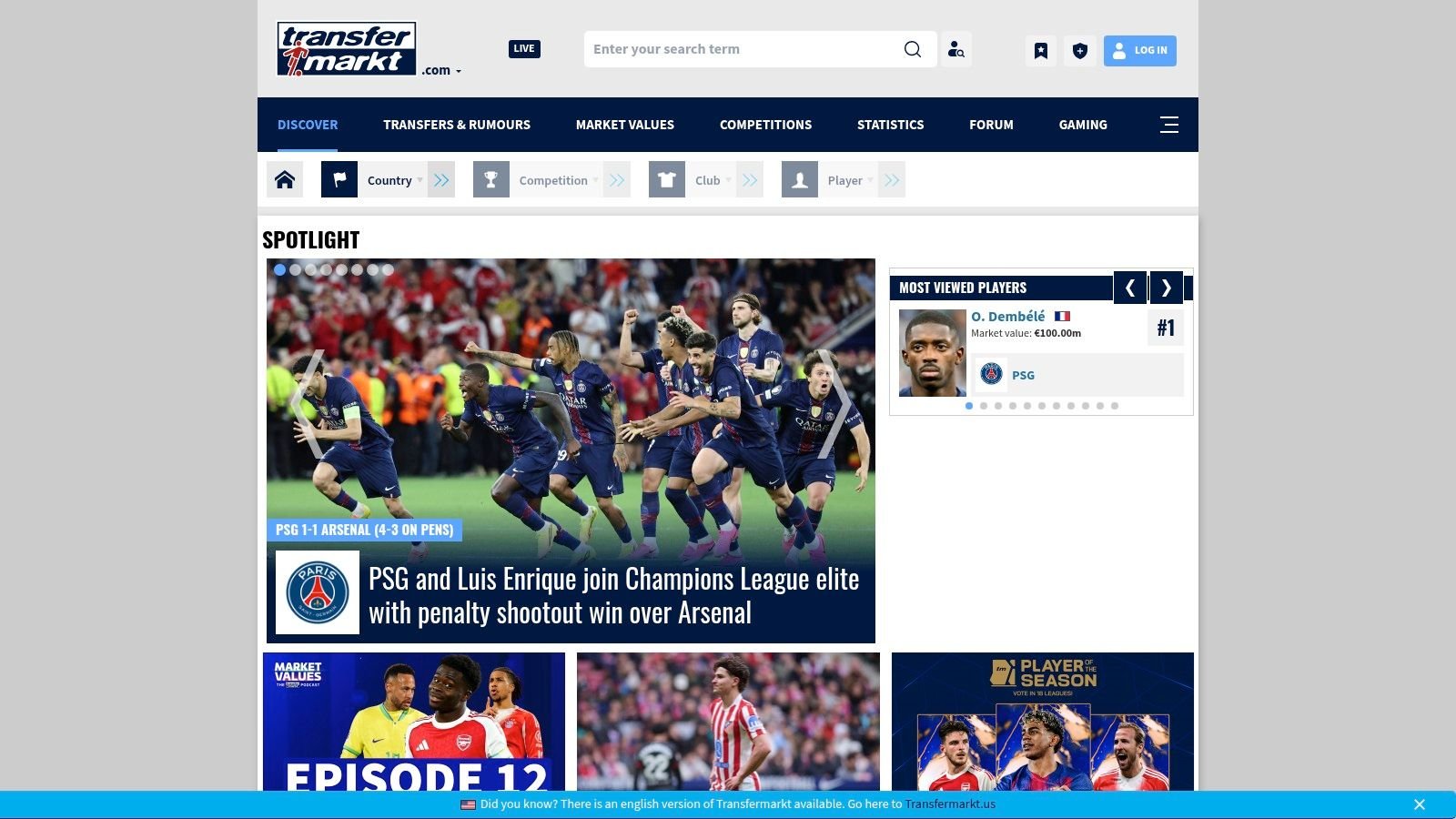
Not every strong football article is built only on event data. Transfermarkt earns its place because squad context often explains the tactical story around Manchester City just as much as the match itself. Contract situations, transfer histories, injury logs, positional listings, and market-value timelines all help build that wider frame.
This matters when discussing depth, succession planning, and recruitment logic. If a full-back's role is changing, or a midfielder's usage is rising, the analysis often gets stronger when the on-ball evidence is tied to contract timelines or squad-building pressures. Transfermarkt is excellent for that layer.
What It Adds Beyond On Ball Analysis
It should still be used carefully. Market values are estimates shaped by community-informed processes, so they're best treated as directional context rather than hard truth. That said, few public sites combine player, staff, transfer, and injury information in such a practical way.
- Best for squad planning context: Useful when articles move from match analysis to roster implications.
- Best for historical movement: Transfer chains and injury logs help reconstruct the background to current roles.
- Not ideal for pure performance analysis: It supports tactical work indirectly rather than leading it.
For Manchester City content, Transfermarkt is often the tab that prevents a tactical article from becoming too narrow.
10. FBref
FBref still belongs in any conversation about the best football statistics sites, even after recent changes reduced its use for advanced event-based work. Sports Data Campus describes it as a foundational football data source created by Sports Reference, using Opta data, and covering thousands of players, teams, and competitions, including the Premier League, LaLiga, Serie A, the Bundesliga, and Ligue 1 in its overview of free football data websites. That breadth is the reason analysts keep returning to it.
For Manchester City writers, the key value now is stability. Team and player pages are clean, seasonal logs are easy to reference, and the structure supports historical sanity checks quickly. That is still useful for profile pieces, including player-focused breakdowns such as this Rico Lewis data and scout report.
How To Use It Properly Now
The mistake is expecting FBref to carry the whole analytical load. It's better used as a reference spine than as the final layer of tactical interpretation, especially where advanced event detail is needed.
Its league and team breadth, plus its durable page structure, make it excellent for comparing eras, checking seasonal outputs, and building article scaffolding. For cutting-edge tactical work, another event-data source usually has to sit beside it.
FBref is strongest when the job is to confirm, compare, and cite cleanly.
Top 10 Football Statistics Sites Comparison
| Tool | Best for / Target audience | Key features | Unique selling point | Limitations | Pricing / Access |
|---|---|---|---|---|---|
| Hudl Wyscout | Club scouts, pro analysts | Full-match video; tagged events; playlists; Data API; role workspaces | Massive global match library + clip-based workflows for fast breakdowns | Expensive for individuals; steep learning curve | Commercial, quote-based |
| Hudl StatsBomb (IQ / IQ Live + Open Data) | Tactical analysts, researchers, educators | IQ & IQ Live platforms; rich event schema (pressures, shot frames); R/Python tooling; Open Data repo | Best-in-class event detail; free Open Data for prototyping | Full platform commercial; Open Data has limited coverage | IQ commercial (quote); Open Data free |
| The Analyst (Opta/Stats Perform) | Journalists, editorial teams, explainers | Opta-powered articles, visuals, rankings, player deep-dives | Credible Opta metrics presented with strong storytelling visuals | Article-focused; limited custom querying or raw data access | Free editorial content; data commercial via Opta |
| Premier League Official Stats | Writers needing authoritative PL facts | Official competition stats; season leaders; methodology pages | Definitive source for Premier League records and definitions | Narrow to PL; limited advanced modeling/xG tools | Free |
| WhoScored | Fans, quick match reference, media | Live 1–10 player ratings; team strengths/weaknesses; match reports | Fast, widely-recognised player ratings and match summaries | Methodology not fully public; ratings can be noisy | Free (ad-supported) |
| SofaScore | Live coverage, mobile users, broadcasters | Live ratings; heatmaps; shot maps; attack momentum timelines; push alerts | Very quick live updates with strong mobile UX and visuals | Limited depth for pro analyst workflows; regional variations in features | Free (ads); premium removes ads |
| FotMob | Rapid match dashboards, post-match turnaround | Live xG; shot maps; player ratings; lineup builder; TV listings | Approachable, consistent presentation across competitions for quick embeds | Not a research DB; limited export/query features; mixed underlying models | Free; premium tiers available |
| Understat | xG/xA-focused analysis & community researchers | Player/team xG and xA; match xG timelines; shot maps; community libs | Free, commonly-cited xG benchmark for shot-quality narratives | Top-league coverage only; model/methodology not fully disclosed | Free |
| Transfermarkt | Transfer analysts, squad planning, off-pitch context | Market values; transfer histories; contracts; injury logs | Extensive transfer/valuation timelines and injury records across tiers | Market values are community estimates; occasional coverage gaps | Free |
| FBref (Sports Reference) | Historical reference, citations, longitudinal analysis | Deep seasonal logs; club & player pages; stable, linkable URLs | Reliable historical archives and consistent page structure for citation | Advanced Opta-derived metrics (xG/xA etc.) removed Jan 2026; less event detail | Free |
BUILDING YOUR ANALYTICAL TOOLKIT
A useful workflow usually starts the same way. The match ends, a pattern stands out, and the first job is deciding whether it was real or just noise.
For Manchester City analysis, that decision rarely comes from one platform. A strong process links tools by task. Wyscout handles the first pass when the question is tactical and clip-led. StatsBomb earns its place when the argument depends on pressure, shot context, rest defence, or box occupation. Premier League Official Stats helps check whether a claim holds up at competition level, while The Analyst is often a good reference for how to package numbers into a readable editorial line.
The public tools fill the gaps between those higher-end platforms. WhoScored is still useful for fast event references across leagues. SofaScore and FotMob are the quickest way to track a game live and catch early patterns worth testing later. Understat remains a practical shortcut for shot-quality stories, especially when the question is simple: did the chance profile match the result? Transfermarkt adds squad-building context, contract timelines, and injury history. FBref stays useful for historical checks and season-to-season reference.
The key is sequence.
Start with the question, not the database. If City's press looked uneven, pull the clips first and test the structure in Wyscout. If the issue is whether the press led to better regains or worse shot concession, move to StatsBomb. If the brief is a fast post-match piece, FotMob or SofaScore can get the draft moving, but those numbers should be verified before they become the spine of the argument. If the angle is role change, recruitment fit, or squad depth, bring in Transfermarkt and FBref early so the tactical point stays tied to player availability and squad design.
That mix is what separates a stats dump from analysis. Good football content connects film, event data, and context in the right order. For a publication such as Manchester City Analysis, that usually means showing how a small tactical shift, a personnel change, or a match-state problem appears across multiple sources before turning it into a clear narrative.
Presentation still matters. Readers do not need every number collected during research. They need the few that clarify the point, supported by clips, charts, and clean framing. DataTeams' visualization guide is a useful reference for improving that part of the workflow.