Pep Guardiola, the Catalan maestro, is widely regarded as one of the most innovative and influential football managers of all time. His tactical brilliance has left an indelible mark on the sport, revolutionizing the way the game is played and inspiring a generation of coaches. Guardiola’s philosophy, deeply rooted in positional play and relentless pressing, has been a constant throughout his career, yet his tactical approach has continuously evolved, adapting to different challenges, players, and opposition strategies. This article aims to trace the evolution of Guardiola’s tactics, highlighting the key shifts and innovations that have marked his journey from Barcelona to Manchester City.
The Foundation: Tiki-Taka and the Barcelona Blueprint (2008-2012)
Guardiola’s managerial reign at Barcelona (2008-2012) ushered in a period of unprecedented dominance, marked by a mesmerizing brand of football known as “tiki-taka.” This style, characterized by intricate short passing, fluid movement, and relentless possession, became synonymous with Guardiola’s Barcelona, captivating audiences worldwide.
The core principles of tiki-taka were deeply ingrained in Guardiola’s footballing philosophy, emphasizing:
- Possession-based Dominance: Maintaining control of the ball was paramount, stifling the opposition and dictating the tempo of the game.
- Positional Play: Players were meticulously positioned to create passing triangles and exploit spaces, ensuring fluidity and unpredictability in attack.
- High Pressing: Losing the ball triggered an immediate and aggressive press, aiming to win back possession high up the pitch and disrupt the opposition’s build-up.
This tactical approach yielded extraordinary success. With Barcelona, he won 14 trophies, including two Champions League titles and three consecutive La Liga crowns. The team’s dominance was built on a solid foundation of possession-based football, with players like Xavi, Iniesta, and Messi orchestrating attacks with their exceptional technical skills and tactical intelligence.
Adaptation and Refinement: The Bayern Munich Chapter (2013-2016)
After a sabbatical, Guardiola took the reins at Bayern Munich in 2013. While inheriting a team already accustomed to success, he sought to implement his distinct style of play, adapting and refining his tactics to suit the German club’s strengths and the Bundesliga’s unique challenges.
At Bayern, Guardiola’s focus shifted towards:
- Increased Versatility: Recognizing the physicality and directness of the Bundesliga, he incorporated more direct attacking elements. The manager also maintained the core principles of possession and positional play.

- Width and Overloads: Guardiola emphasized the use of wide players, like Arjen Robben and Franck Ribery, to stretch the opposition’s defence and create overloads in wide areas, exploiting the spaces created by the team’s central dominance.

- Defensive Solidity: Recognizing the importance of defensive stability, Guardiola implemented a more compact and organized defensive structure, aiming to minimize counter-attacking threats while maintaining high pressure.
This evolution in tactics allowed Bayern to maintain their domestic dominance, winning three consecutive Bundesliga titles, and make deep runs in the Champions League. However, they fell short of European glory, highlighting the challenges of adapting Guardiola’s style to different leagues and competitions.
The Manchester City Era: Innovation and Evolution (2016-Present)
Guardiola’s arrival at Manchester City in 2016 marked a new chapter in his managerial career. In the Premier League’s fast-paced and physically demanding environment, Guardiola has further evolved his tactics. He has incorporated new elements and strategies to maintain City’s dominance.
Key innovations in Guardiola’s Manchester City era include:
- Hybrid Systems and Tactical Flexibility: Guardiola has experimented with various formations and tactical setups. He often shifts between systems within a single match, adapting to the opposition’s strengths and weaknesses. This flexibility has made City unpredictable and difficult to counter.
- Full-Back Inversions: Guardiola’s use of inverted full-backs has been a defining feature of his Manchester City tenure. These defenders tuck into midfield during build-up play, creating numerical superiority in central areas and overloading the opposition’s midfield.
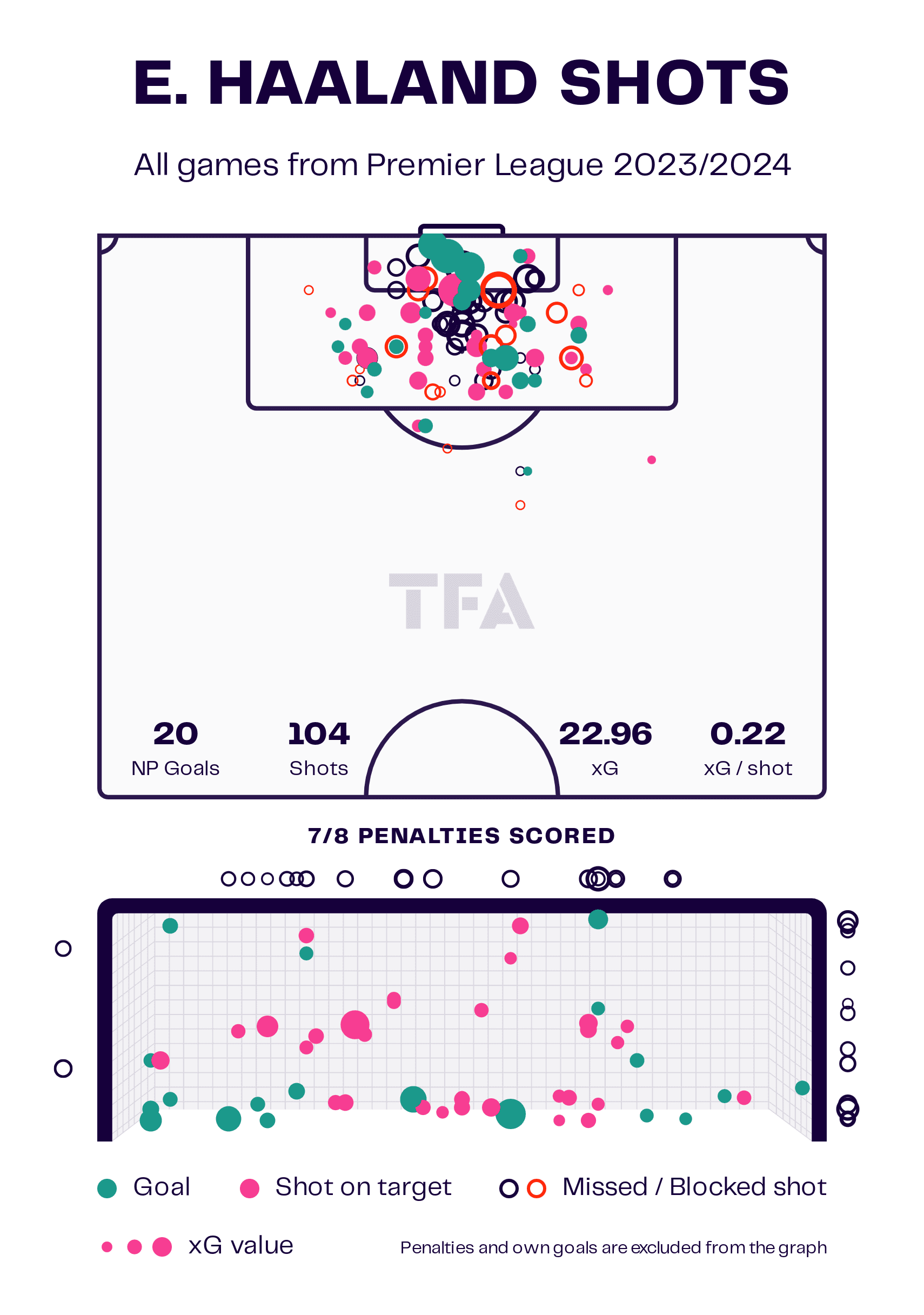
- Exploiting Individual Brilliance: Guardiola has effectively harnessed the individual brilliance of players like Kevin De Bruyne, Sergio Aguero, and, more recently, Erling Haaland. These players are given the freedom to express their creativity within the framework of his system. This adds an element of unpredictability and flair to City’s attack.
Manchester City’s struggled against Brighton’s high-intensity pressing and well-organized defence. This suggests that even the most meticulously crafted systems can be vulnerable to well-executed counter-strategies.
Analysis of the Brighton Match:
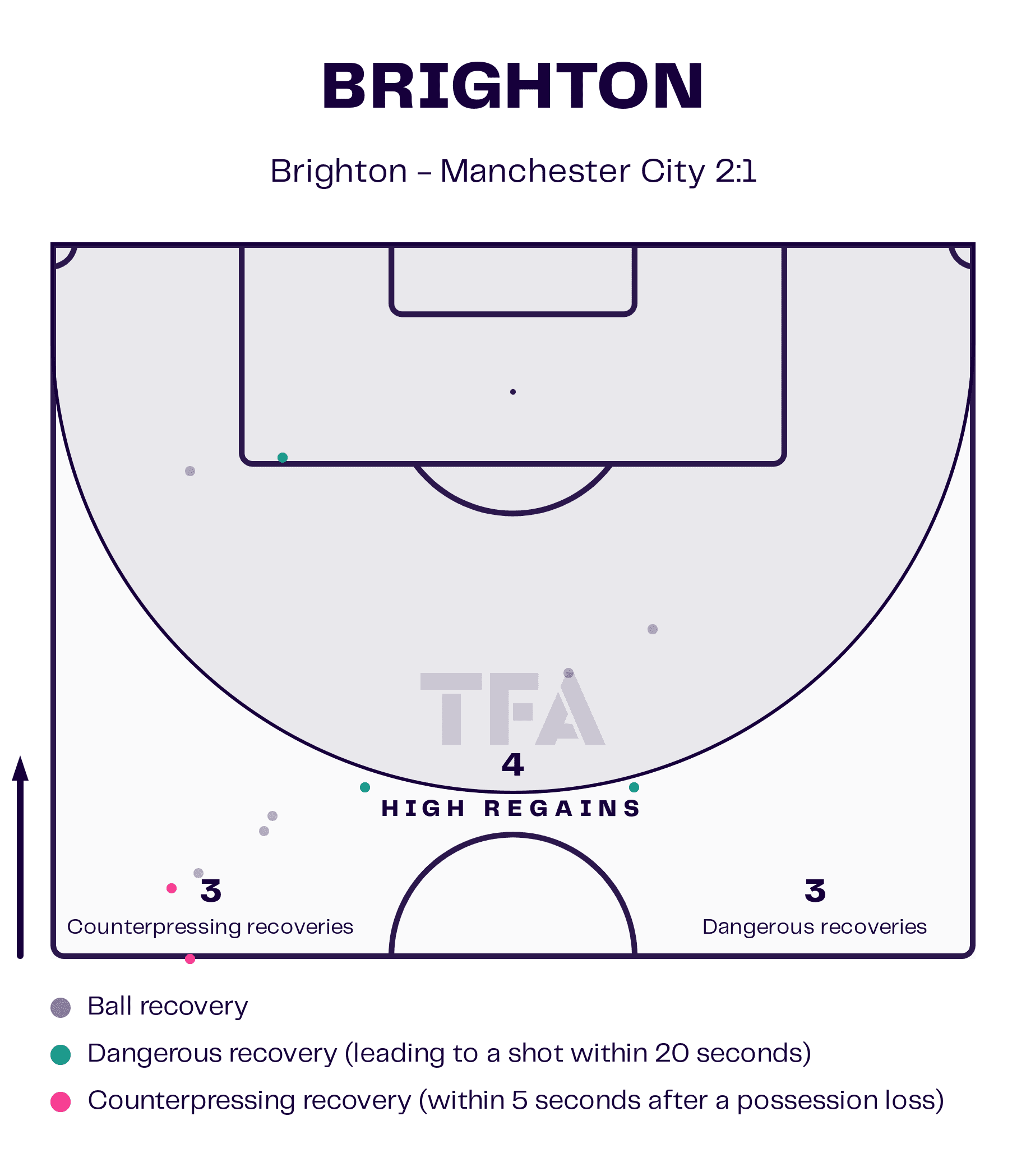
- Midfield Overload and Counter-Pressing: The introduction of Carlos Baleba and employing a high-intensity counter-press, disrupted City’s midfield dominance. This forced turnovers and created scoring opportunities. Baleba’s aggressive pressing effectively neutralized City’s build-up play, preventing them from establishing their usual rhythm.

- Exploiting Defensive Spaces: Brighton’s use of wide players and ability to stretch City’s defence, particularly in the build-up to the equalizer, exposed vulnerabilities in City’s defensive structure. The tactical breakdown illustrates how Brighton created overloads in wide areas and isolated City’s defenders. This created space for crosses and cutbacks.
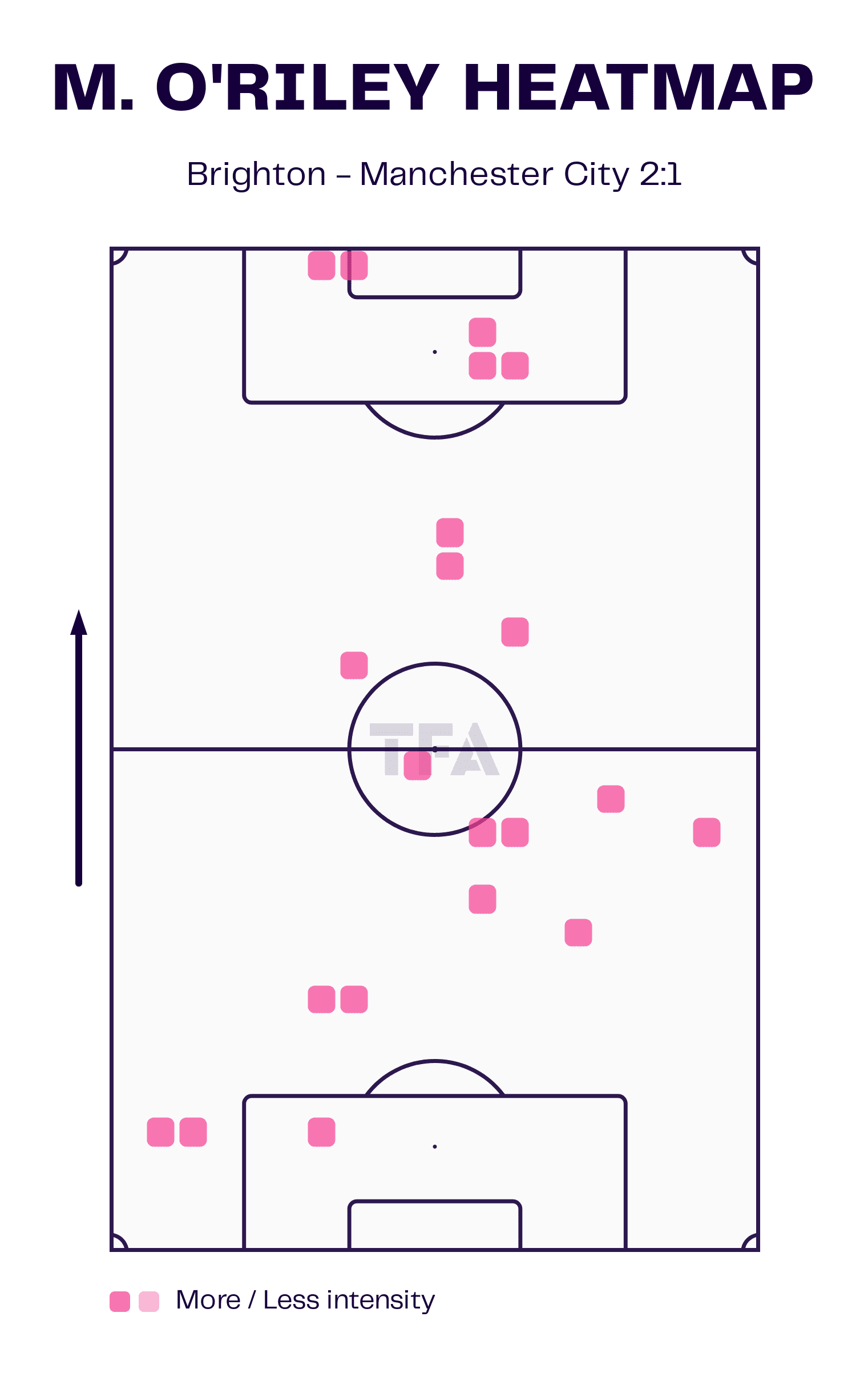
- Individual Brilliance and Tactical Flexibility: Matt O’Riley’s impactful performance, particularly his positioning and movement leading to the winning goal, highlights the importance of individual brilliance and tactical flexibility within a well-defined system. O’Riley found pockets of space and exploited City’s defensive weaknesses. This showcases how a manager’s trust in players’ decision-making can lead to decisive moments.
This match serves as a reminder that even the most dominant teams can be vulnerable to well-executed tactical plans. It underscores the importance of continuous adaptation and evolution in a sport where strategies are constantly being challenged and redefined.
Conclusion: A Legacy of Innovation and Adaptation
Pep Guardiola’s tactical journey has been marked by a constant pursuit of excellence, a relentless desire to innovate, and a willingness to adapt. From the mesmerizing tiki-taka of Barcelona to the hybrid systems and tactical flexibility of Manchester City. Guardiola’s approach has continuously evolved, leaving an indelible mark on the sport.
The Brighton match serves as a reminder that even the most meticulously crafted systems can be vulnerable to well-executed counter-strategies. This further emphasises the importance of continuous adaptation and evolution.
Guardiola’s legacy extends beyond trophies and accolades. He has revolutionized the way football is played, inspiring a generation of coaches and players with his innovative tactics. His journey serves as a blueprint for aspiring managers and a source of endless fascination for football enthusiasts worldwide.
Visuals via TFA data viz engine