Manchester City’s recent victory against West Ham United showcased more than just the stuff they practised on the tactics board. It highlighted their tactical flexibility and their ability to adapt and overcome challenges posed by different opponents. While West Ham’s defensive approach aimed to stifle City’s attacking fluency, Guardiola’s side demonstrated their capacity to shift gears and find solutions, ultimately dismantling the Hammers’ resistance.
This article delves into Manchester City’s tactical adaptability, examining how they responded to West Ham’s defensive setup. We’ll explore the key tactical adjustments made by Guardiola, highlighting how City exploited spaces, maintained possession dominance, and ultimately secured a comfortable victory.
Deciphering West Ham’s Defensive Strategy
West Ham United, under their astute manager, approached the match against Manchester City with a clear defensive plan in the Premier League. Recognizing City’s dominance in possession and their potent attacking threat, they opted for a compact defensive structure designed to limit spaces and frustrate their opponents.

Key elements of West Ham’s defensive strategy included:
- Deep Defensive Block: West Ham positioned their defensive line deep, aiming to compress the space available for City’s attackers, particularly Erling Haaland, to operate in.
- Narrow Defensive Shape: West Ham maintained a narrow defensive shape, congesting the central areas and forcing City to wide areas.
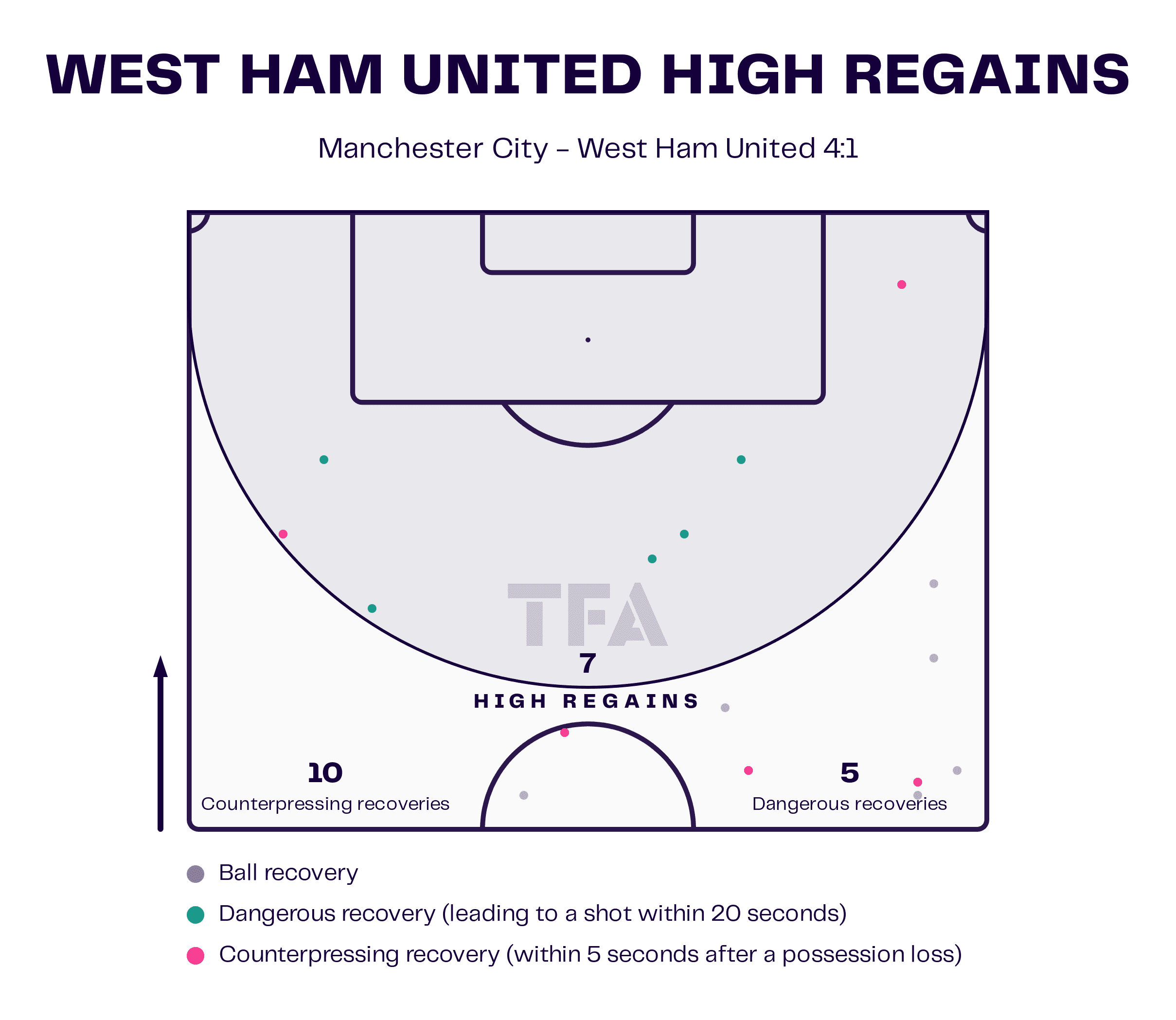
- Counter-Pressing: When possession was lost, West Ham engaged in aggressive counter-pressing, attempting to win the ball back immediately and disrupt City’s build-up play.
City’s Initial Response: Probing for Weaknesses
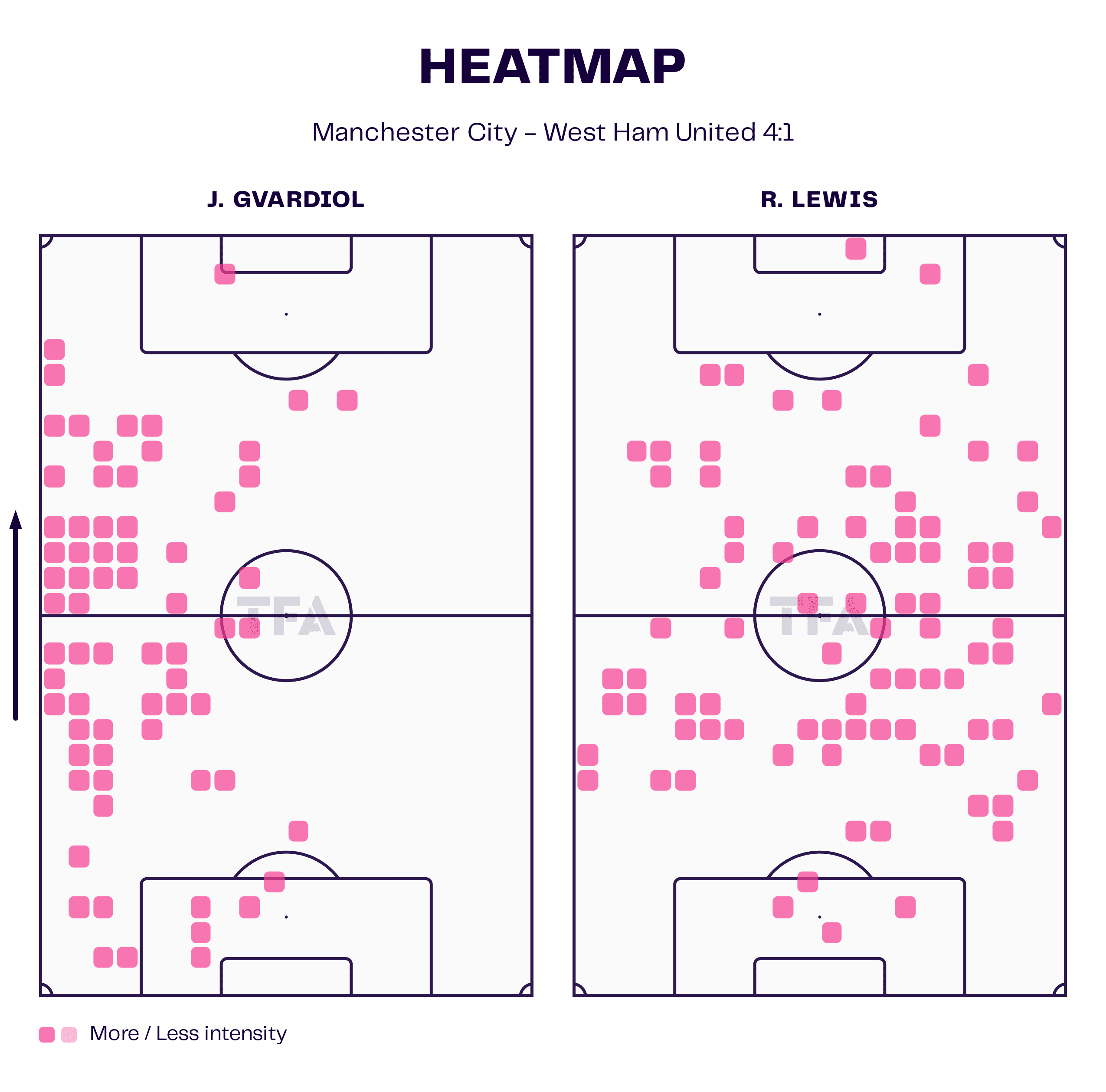
Faced with West Ham’s disciplined defensive setup, Manchester City initially probed for weaknesses, patiently circulating the ball and seeking openings. They utilized their fullbacks, Gvardiol and Lewis, to provide width, stretching West Ham’s defence horizontally.
However, West Ham’s compact defensive block proved resilient, limiting City’s penetration through the central areas. Recognizing the need for tactical adjustments, Guardiola’s side began to implement subtle yet effective changes to their approach.
Tactical Adaptations: Unlocking the Defense
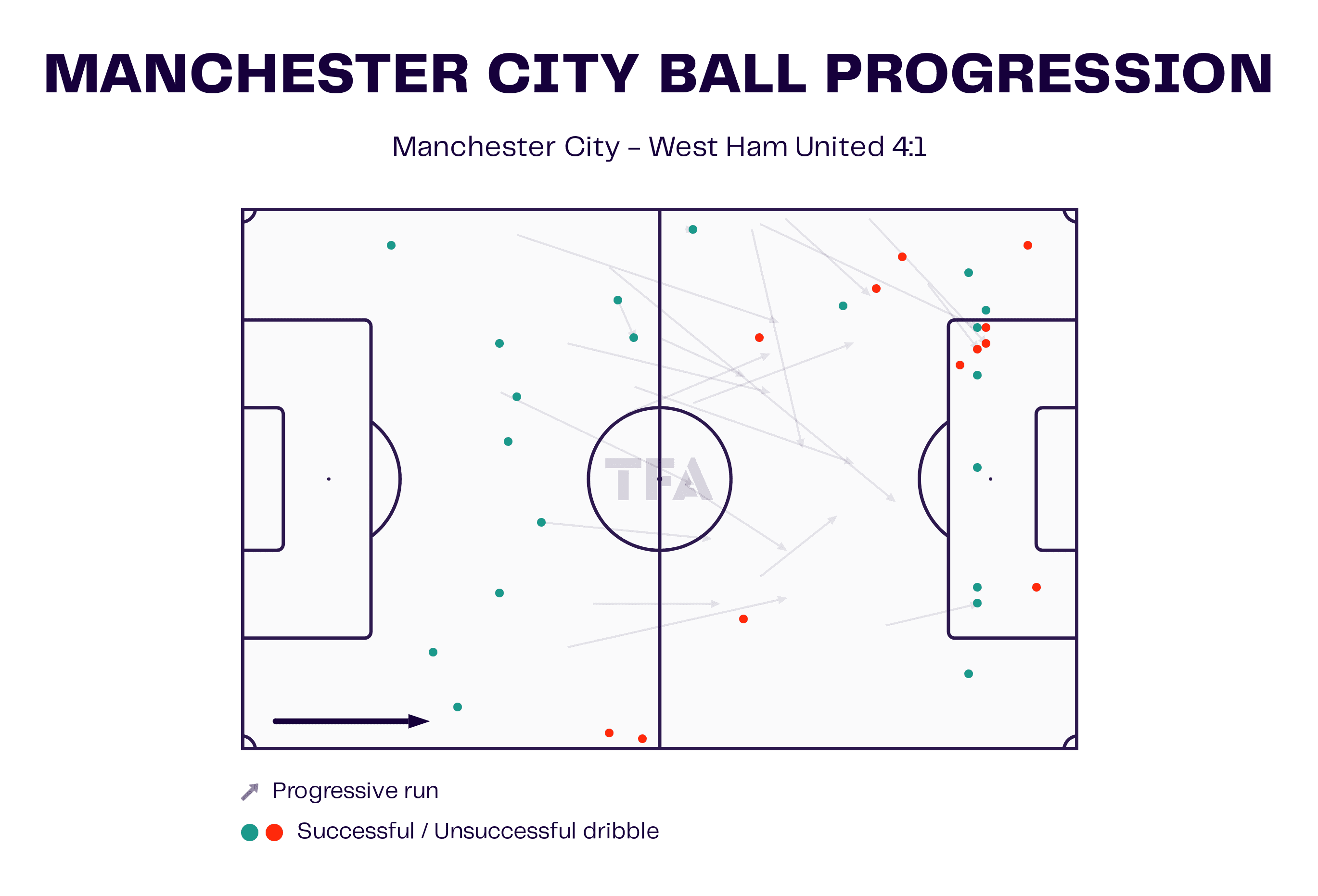
1. Exploiting Width and Overlapping Runs:
City recognized that West Ham’s narrow defensive shape left spaces vulnerable on the flanks. They began to exploit this by utilizing the width provided by their fullbacks, encouraging overlapping runs from Gvardiol and Lewis. These runs created numerical overloads on the wings, stretching West Ham’s defence and creating opportunities for cutbacks and crosses.

2. Quick Passing and Movement:
To break down West Ham’s compact defensive block, City emphasized quick passing and intricate movement. They increased the tempo of their passing, looking to disorient the opposition and create gaps through rapid ball circulation. The interplay between De Bruyne, Bernardo Silva, Foden, and Savinho was crucial, as they exchanged quick passes and interchanged positions to disrupt West Ham’s defensive organization.
3. Patience and Persistence:
Despite early frustrations, City maintained their composure, refusing to be rushed into forcing passes or taking low-percentage shots. They exhibited patience, continuing to circulate the ball and probe for openings. This patience paid off as West Ham’s defensive concentration eventually waned, leading to gaps appearing in their defensive structure.
The Turning Point: Savinho’s Influence
Savinho’s performance against West Ham was instrumental in City’s tactical success. His ability to operate effectively in wide areas, combined with Walker on the right flank, created consistent threats. His precise crossing and passing unlocked West Ham’s defence, providing opportunities for Haaland to exploit.
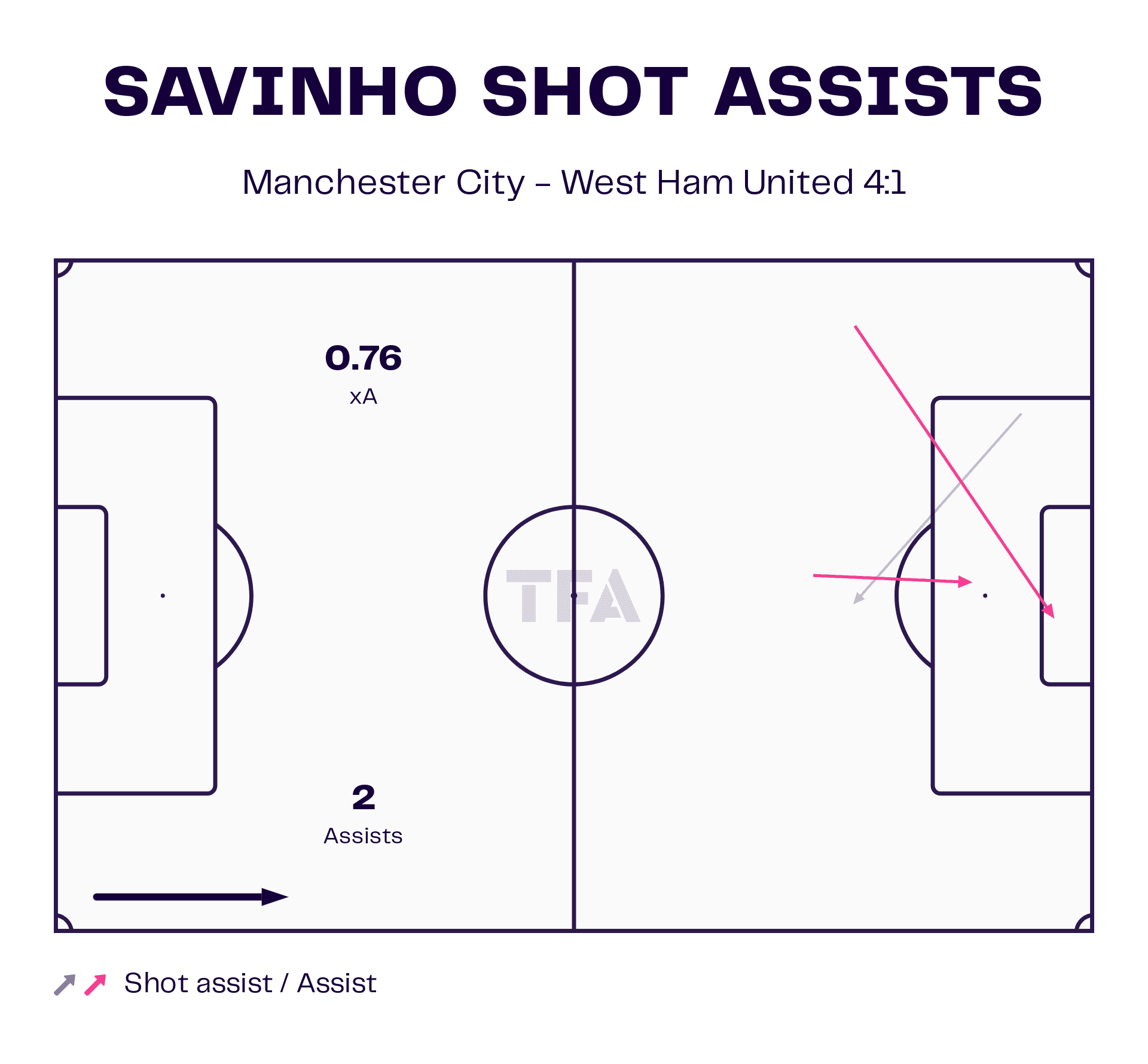
Savinho’s two assists for Haaland’s goals epitomized City’s tactical approach. The first goal came from a swift counter-attack, with Savinho’s perfectly weighted pass finding Haaland in stride, allowing him to finish with ease. The second goal showcased City’s ability to exploit space on the flanks, with Savinho delivering a pinpoint cross for Haaland to head home.
Dominating Possession and Dictating Tempo
Throughout the match, Manchester City maintained their characteristic possession dominance. They controlled the tempo of the game, dictating the flow and forcing West Ham to chase shadows.
City’s midfield trio, consisting of De Bruyne, Gundogan, and Bernardo Silva, were instrumental in this aspect. Their technical ability, passing accuracy, and positional awareness allowed City to retain possession and build attacks from deep.
West Ham, despite their resolute defending, struggled to gain a foothold in the game. Their counter-pressing attempts were often nullified by City’s composure and precise passing. As the match progressed, West Ham’s defensive resilience began to fade, leading to more frequent errors and opportunities for City.
Clinical Finishing and Defensive Solidity

While City’s tactical flexibility was crucial in creating scoring opportunities, their clinical finishing was equally important in securing the victory. Haaland’s predatory instincts in the penalty area were on full display, as he converted two of the chances created for him.
Beyond their attacking dominance, City also displayed defensive solidity. Their defensive organization was compact and disciplined, limiting West Ham’s opportunities to create clear-cut chances. Despite West Ham’s efforts to test City’s defence, particularly in the first half, Ortega stood strong in goal, making crucial saves to preserve City’s lead.
Conclusion: A Masterclass in Tactical Adaptation
Manchester City’s victory against West Ham United was a testament to their tactical flexibility and their ability to adapt to different opponents. While West Ham presented a stern defensive challenge, City’s tactical adjustments, patience, and clinical finishing ultimately proved decisive.
Savinho’s performance highlighted City’s evolving attacking dynamics, demonstrating his growing influence within Guardiola’s system. As City continues their pursuit of silverware on multiple fronts, their capacity to adapt and overcome tactical challenges will be a key factor in their success.
Visuals via TFA data viz engine