Manchester City’s recent loss against Brighton & Hove Albion was a stark reminder that even the most dominant teams have vulnerabilities. While a “catalogue of injuries” has undoubtedly played a role in City’s recent struggles, a deeper tactical issue was laid bare at the AMEX Stadium: City’s midfield is increasingly susceptible to high-energy, tactically flexible opponents. This article will examine how Brighton’s unique approach exposed weaknesses in City’s midfield control, potentially offering a blueprint for other teams to exploit.
Brighton’s First-Half Struggles: A Necessary Foundation
Understanding Brighton’s second-half success requires analyzing their first-half struggles. Despite City’s dominance in possession (67%), their opening goal stemmed from a Brighton error.
Early on, Brighton’s midfield became congested, with their passing network heavily centralized and their wingers largely uninvolved. This played directly into City’s hands. Guardiola’s teams thrive on controlling the central areas, using quick passing combinations and positional rotations to suffocate opponents. Brighton’s narrow approach allowed City to establish their familiar rhythm.
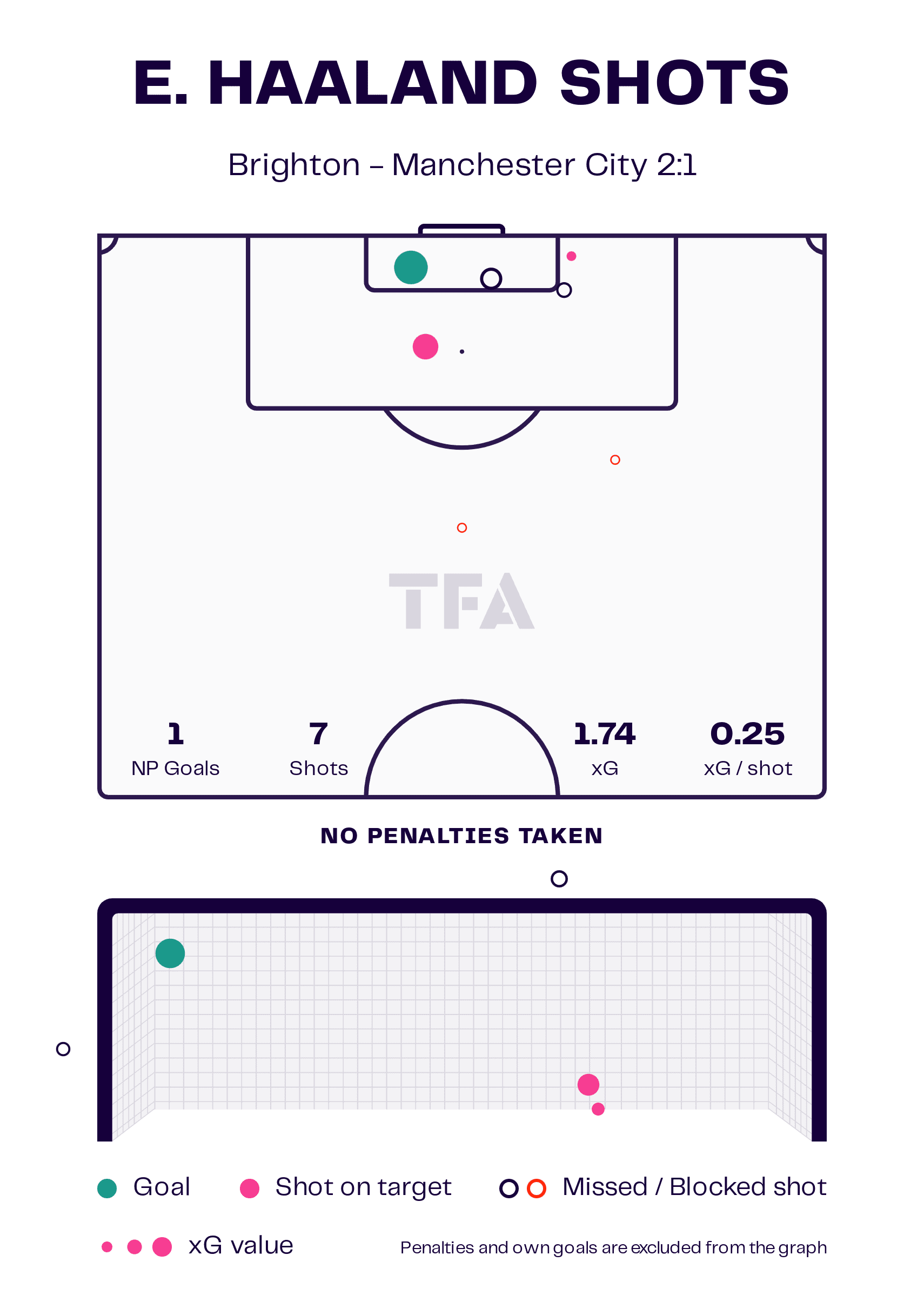
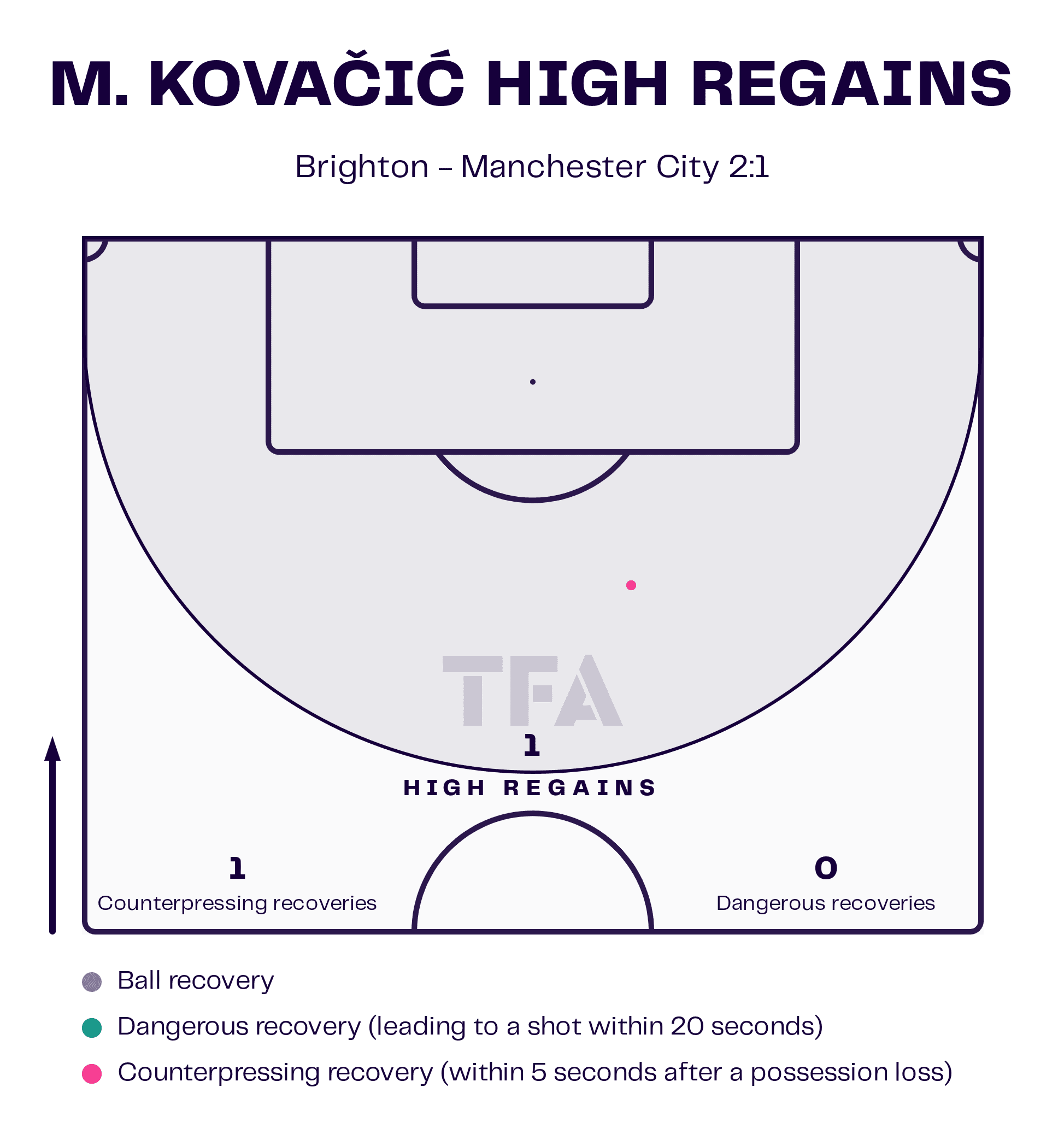
A key moment highlighting Brighton’s early struggles came when Simon Adingra was dispossessed in midfield. Under pressure from City’s press, Adingra attempted a risky forward pass that was easily intercepted. Mateo Kovačić, with time and space afforded by Brighton’s exposed central defence, played a pinpoint through ball to Erling Haaland, who finished clinically. This goal underlined the danger of letting City win the ball back in midfield with Brighton’s defence out of shape.
The Second-Half Transformation: The “Midfield Vacuum”
At halftime, Brighton’s manager made a crucial tactical change, replacing the struggling Ayari with Carlos Baleba. While seemingly a simple substitution, Baleba’s introduction had a cascading effect on Brighton’s midfield dynamic.
Baleba’s primary impact was his relentless high-pressing and counter-pressing. Unlike a traditional midfielder who might drop back after losing possession, Baleba aggressively hunted the ball, disrupting City’s attempts to build from the back. This constant pressure forced City into rushed passes and turnovers, creating transition opportunities for Brighton.
However, Baleba’s impact extended beyond his individual defensive actions. His presence facilitated Hurzeler’s key tactical innovation: a “midfield vacuum.” Brighton’s midfield was essentially emptied, with their wide players pushed high and central midfielders given license to roam and exploit space. This created a numerical overload against City’s back four, with Brighton attackers consistently outnumbering defenders in dangerous areas.
This “midfield vacuum” directly challenged City’s midfield control. With Brighton’s central midfielders often occupying advanced positions, City’s midfielders faced a dilemma:
- If they followed their markers tightly, they risked leaving vast spaces in midfield for Brighton’s attackers to exploit.
- If they held their positions, Brighton’s midfielders could receive the ball unopposed and dictate the tempo of the game.
This tactical conundrum seemed to paralyze City’s midfield. They were unable to effectively press Brighton’s build-up play without compromising their defensive structure.
The Impact of Wide Players and Fluid Movement: Amplifying the Vacuum
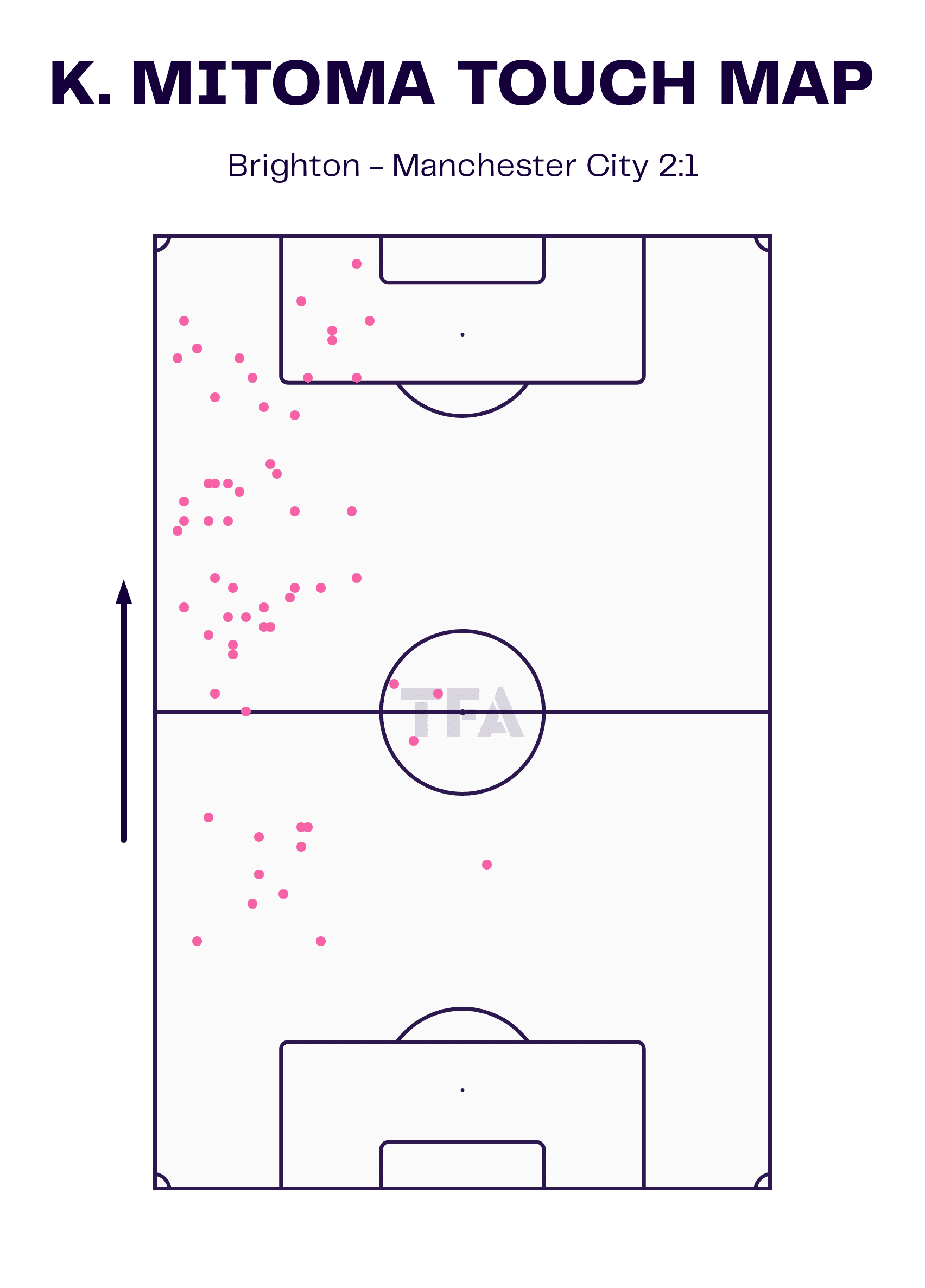
Crucial to Brighton’s success was the increased involvement of their wide players. Kaoru Mitoma and Pervis Estupiñán, largely peripheral figures in the first half, became key attacking outlets. Their high positioning stretched City’s defence horizontally, creating more space for Brighton’s central attackers to operate.

Further amplifying Brighton’s threat was their fluid movement. Players were encouraged to interchange positions, creating uncertainty and confusion within City’s defensive ranks. This made it difficult for City to track runners and maintain their defensive shape, leading to numerous scoring opportunities for Brighton.

The winning goal epitomized Brighton’s tactical mastery. Substitute Matt O’Riley, nominally a midfielder, drifted wide early in the build-up, drawing Manchester City defenders towards him. This created space for Danny Welbeck to receive the ball in a dangerous central position. Welbeck’s lay-off found Joao Pedro, who in turn slipped a pass to the onrushing O’Riley for a simple finish.
This goal highlighted the effectiveness of Brighton’s “midfield vacuum.” By emptying the central areas and utilizing fluid movement, Brighton created a situation where their midfielders were constantly attacking City’s defence, even when starting from wide positions.
Implications for Manchester City: A Blueprint for Opponents?
Brighton’s victory has potentially far-reaching implications for Manchester City. It has exposed a tactical vulnerability that other teams might seek to exploit. The “midfield vacuum” approach, combined with high pressing and fluid movement, proved remarkably effective at disrupting City’s midfield control and creating scoring opportunities.
Moving forward, Guardiola must find solutions to counter this tactical trend. This might involve:
- Personnel changes: Introducing more mobile and defensively-minded midfielders could help City cope with high-pressing and counter-pressing systems.
- Tactical adjustments: Guardiola could consider using a more compact defensive shape or employing a double pivot in midfield to provide greater defensive solidity.
- A combination of both: Ultimately, addressing this issue likely requires a multifaceted approach that considers both personnel and tactical factors.
Conclusion: The Evolving Challenge of Midfield Control
Brighton’s victory over Manchester City underscores the evolving tactical landscape of modern football. Midfield control, long a hallmark of Guardiola teams, is becoming increasingly difficult to maintain against opponents who embrace high pressing, fluid movement, and unconventional formations.
City’s midfield struggles against Brighton serve as a warning sign. If Guardiola fails to adapt and find solutions, City may find themselves increasingly vulnerable to teams employing similar tactics. The challenge for Guardiola now is to evolve his approach and ensure that City’s midfield remains a strength rather than a weakness.
Visuals via TFA data viz engine