Manchester City’s recent Champions League encounter with Real Madrid was a rollercoaster of emotions, ultimately ending in a 2-3 defeat at home. While the attacking prowess of both sides was on full display, it was the defensive vulnerabilities of Manchester City that proved to be their undoing. This analysis delves into the specific errors, tactical missteps, and individual performances that contributed to City’s collapse, examining the underlying causes and potential solutions for future encounters.
A Shaky Foundation: Individual Errors Under the Spotlight
Individual errors are an inevitable part of football, but their impact is magnified in high-stakes matches. In City’s case, several individual mistakes proved costly, directly leading to Real Madrid’s goals.
- Ederson’s Mishit Clearance: Perhaps the most glaring error came from City’s goalkeeper, Ederson, whose mishit clearance directly led to Real Madrid’s second equalizer. The source notes it was a “gift” and a shank. The analysis further suggests that Ederson’s hand positioning limited his ability to react effectively, turning the ball back into a dangerous area. This moment raises questions about Ederson’s decision-making and technical execution under pressure.

- Rico Lewis’s struggles: The 20-year-old Rico Lewis, who came on as a substitute, faced a daunting task against the experienced Vinícius Júnior. The source indicates that Vinícius Júnior was able to get past Lewis. Later in the game, Vinícius Júnior “stole it from Lewis.” While Lewis’s potential is undeniable, this match highlighted his vulnerability against world-class attackers.

- Akanji’s Clever Play: Akanji made a clever defensive play, dropping his leg back to cover the far post and cutting out a potential cross.
Tactical Adjustments Gone Wrong
Beyond individual errors, tactical decisions and adjustments also played a significant role in City’s defensive struggles.
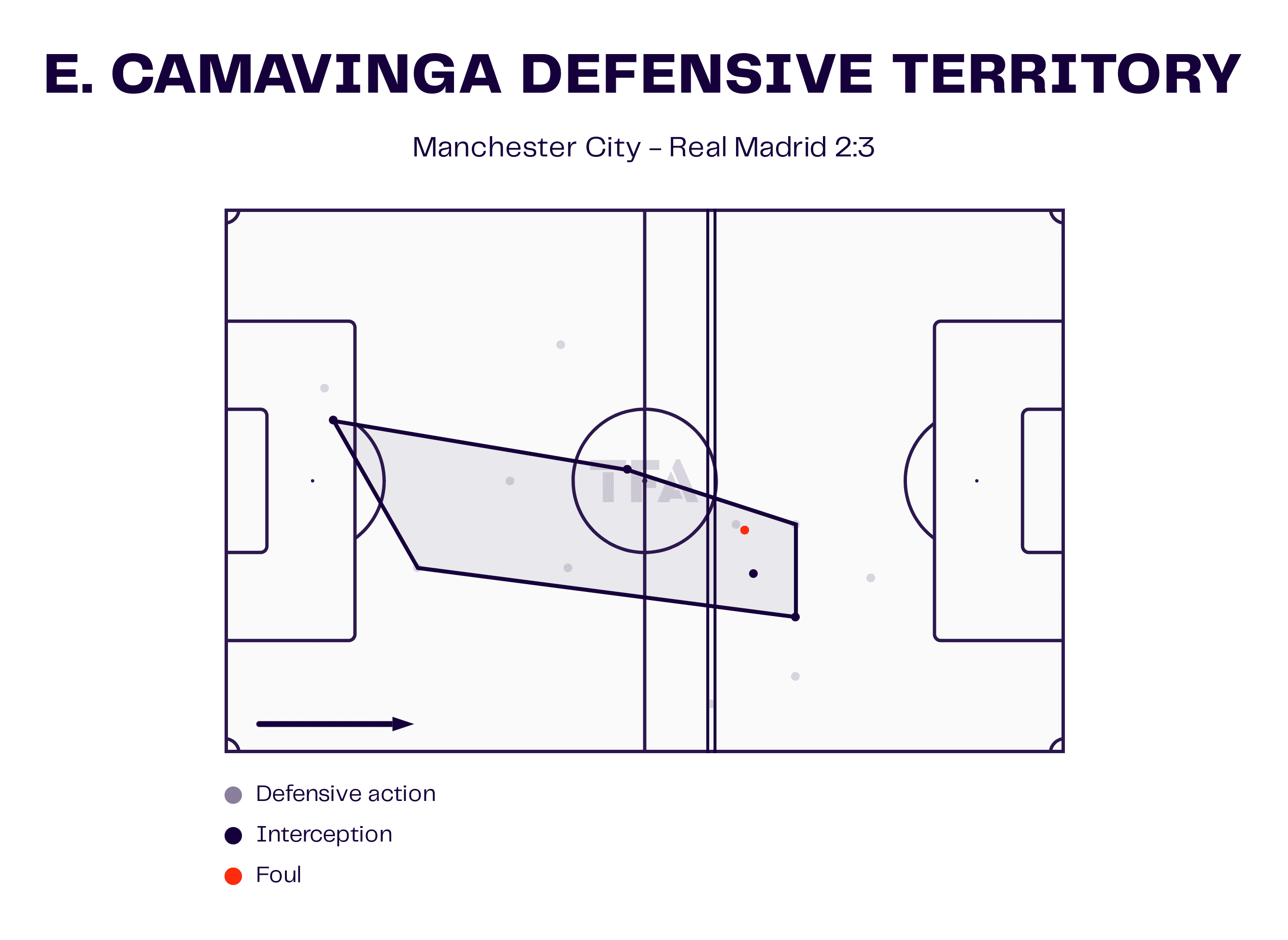
- Camavinga at Right-Back: Real Madrid’s deployment of Eduardo Camavinga at right-back was a somewhat defensive move. This decision aimed to provide control and stability to Madrid’s backline, potentially limiting City’s attacking threat from that flank. While Camavinga is not as comfortable with the ball at his feet, he was likely selected for his defensive capabilities.

- Defensive Line: A high defensive line can be a double-edged sword. While it allows a team to compress the space and win the ball back quickly, it also leaves them vulnerable to pacey attackers making runs in behind. Real Madrid exploited this vulnerability, particularly with Vinícius Júnior and Mbappé, who constantly threatened to breach City’s high line.
- Lack of Midfield Protection: City’s midfield sometimes struggled to provide adequate protection to the defence. Real Madrid’s midfielders were able to find space and time on the ball, allowing them to dictate the tempo and create attacking opportunities. This lack of midfield support left City’s defenders exposed and vulnerable to Madrid’s attacking waves.
Analyzing Key Defensive Moments

To further understand City’s defensive frailties, it’s crucial to dissect specific moments from the match.
- Real Madrid’s First Goal: Mbappé’s goal showcased a combination of individual brilliance and defensive hesitation. Mbappé went for the body rather than heading the ball, and Ederson was unable to react in time. This goal highlighted a lack of communication and coordination within the City’s defence.
- Bellingham’s Winner: Bellingham’s late winner was a result of several factors: Bellingham won a header, the ball was loose from Manchester City, and there was no need for Ederson to come again. Vinícius Júnior helped the ball over hoping that Bellingham could get there. This goal encapsulated City’s defensive collapse in the final moments of the match.
Potential Solutions and Future Adjustments
Addressing Manchester City’s defensive frailties requires a multi-faceted approach, focusing on individual improvement, tactical adjustments, and strategic player acquisitions.
- Goalkeeping Stability: Ederson is generally regarded as a world-class goalkeeper, but his error raises questions about his consistency and decision-making under pressure.
- Defensive Reinforcements: Investing in additional defensive talent could provide greater depth and competition, pushing existing players to improve and offering tactical flexibility.
- Tactical Flexibility: Guardiola may need to consider a more pragmatic approach in certain matches, particularly against high-quality opponents. This could involve a slightly deeper defensive line, greater midfield protection, and a focus on counter-attacking opportunities.
- Developing Young Talents: Nurturing young talents like Rico Lewis is crucial for the long-term success of the team. Providing them with opportunities to learn and grow, while also offering adequate support and guidance, will be essential.
Conclusion: A Wake-Up Call for City
Manchester City’s defeat to Real Madrid served as a wake-up call, exposing defensive vulnerabilities that must be addressed if they are to achieve their Champions League ambitions. While individual errors and tactical missteps played a significant role, the underlying issue appears to be a lack of defensive stability and resilience. By addressing these issues through targeted improvements and strategic adjustments, Manchester City can regain their defensive solidity and mount a stronger challenge in future encounters.
Visuals via TFA data viz engine