Manchester City, the perennial powerhouse of English football, are facing a moment of reckoning. After years of unprecedented success, a series of alarming setbacks have cast a shadow of doubt over their future. A string of five consecutive defeats, a first in Pep Guardiola’s illustrious managerial career, has left pundits and fans questioning whether the Cityzens’ era of dominance has reached its twilight. The sources analyze this dramatic downturn, pointing to key factors that suggest a potential shift in the balance of power in the Premier League.
The Rodri Conundrum: The Absence of a Crucial Cog
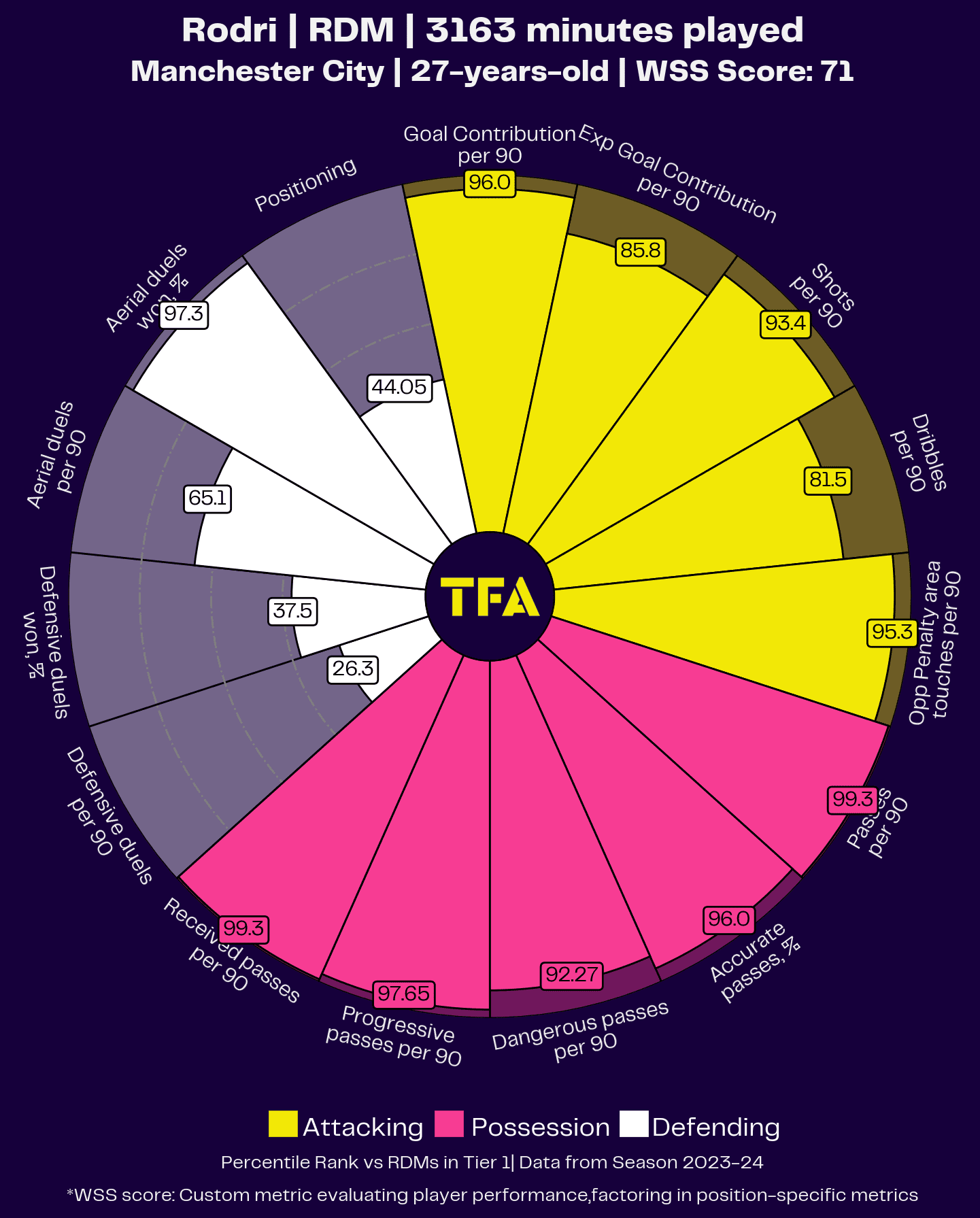
The absence of defensive midfielder Rodri is a major contributing factor to City’s recent struggles. Rodri, the anchor of City’s midfield, provides defensive solidity, dictates the tempo, and facilitates their intricate passing game. His absence has exposed a glaring vulnerability in City’s midfield, leaving them susceptible to opposition attacks.
In the humiliating 4-0 defeat to Tottenham Hotspur, City’s midfield was overrun, allowing James Maddison to orchestrate the game with impunity. Former Manchester United defender Gary Neville noted that City looked “as short as I have seen them since Guardiola’s first season,” highlighting the significant impact of Rodri’s absence. The lack of a like-for-like replacement for Rodri has forced Guardiola to experiment with different midfield combinations, none of which have been able to replicate the Spaniard’s influence.
This vulnerability in midfield was further exacerbated by Guardiola’s tactical experiment against Tottenham. The decision to field a narrow attacking formation without traditional wingers backfired spectacularly, as discussed in our previous conversation. The lack of width allowed Tottenham to congest the central areas, stifling City’s creativity and rendering their attack predictable. This tactical misstep compounded the problems caused by Rodri’s absence, further undermining City’s midfield stability.
Defensive Fragility: An Uncharacteristic Weakness Exposed

City’s defensive solidity, once their hallmark, has crumbled in recent weeks. The sources emphasize the team’s uncharacteristic fragility at the back, conceding goals at an alarming rate. Guardiola himself acknowledged this weakness, stating, “In this moment we are fragile defensively.”
The absence of Rodri has undoubtedly played a role in this defensive decline, as his positional awareness and ability to break up opposition attacks are sorely missed. However, the sources also point to individual errors and a lack of cohesion within the defensive unit as contributing factors.
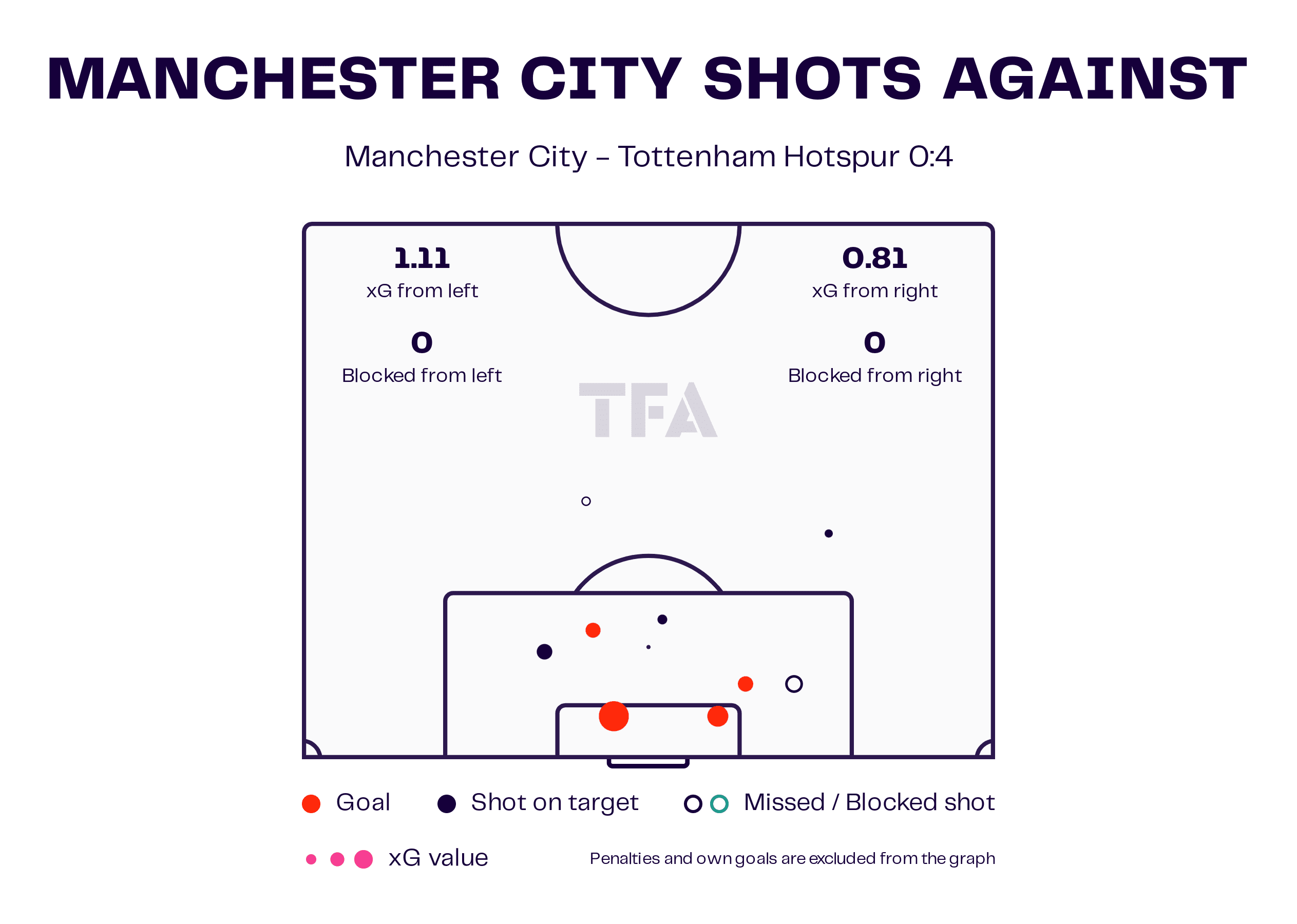
Against Tottenham, City’s defence looked disjointed and susceptible to counter-attacks. Kulusevski’s incisive runs and Maddison’s intelligent movement caused havoc in City’s backline, leading to multiple scoring opportunities for Tottenham. The ease with which Tottenham sliced through City’s defence was alarming, particularly considering City’s reputation for defensive resilience.
The lack of width in City’s attacking formation also contributed to their defensive vulnerability. As previously discussed, the absence of traditional wingers forced the full-backs to push high up the pitch, leaving them exposed defensively. This tactical imbalance allowed Tottenham to exploit the space behind City’s full-backs, leading directly to their first goal.
Haaland’s Profligacy: A Misfiring Goal Machine
Erling Haaland, City’s prolific goalscorer, has endured a rare dip in form, coinciding with the team’s overall decline. While his goal tally remains impressive, his recent performances have lacked the clinical edge that characterized his previous seasons.
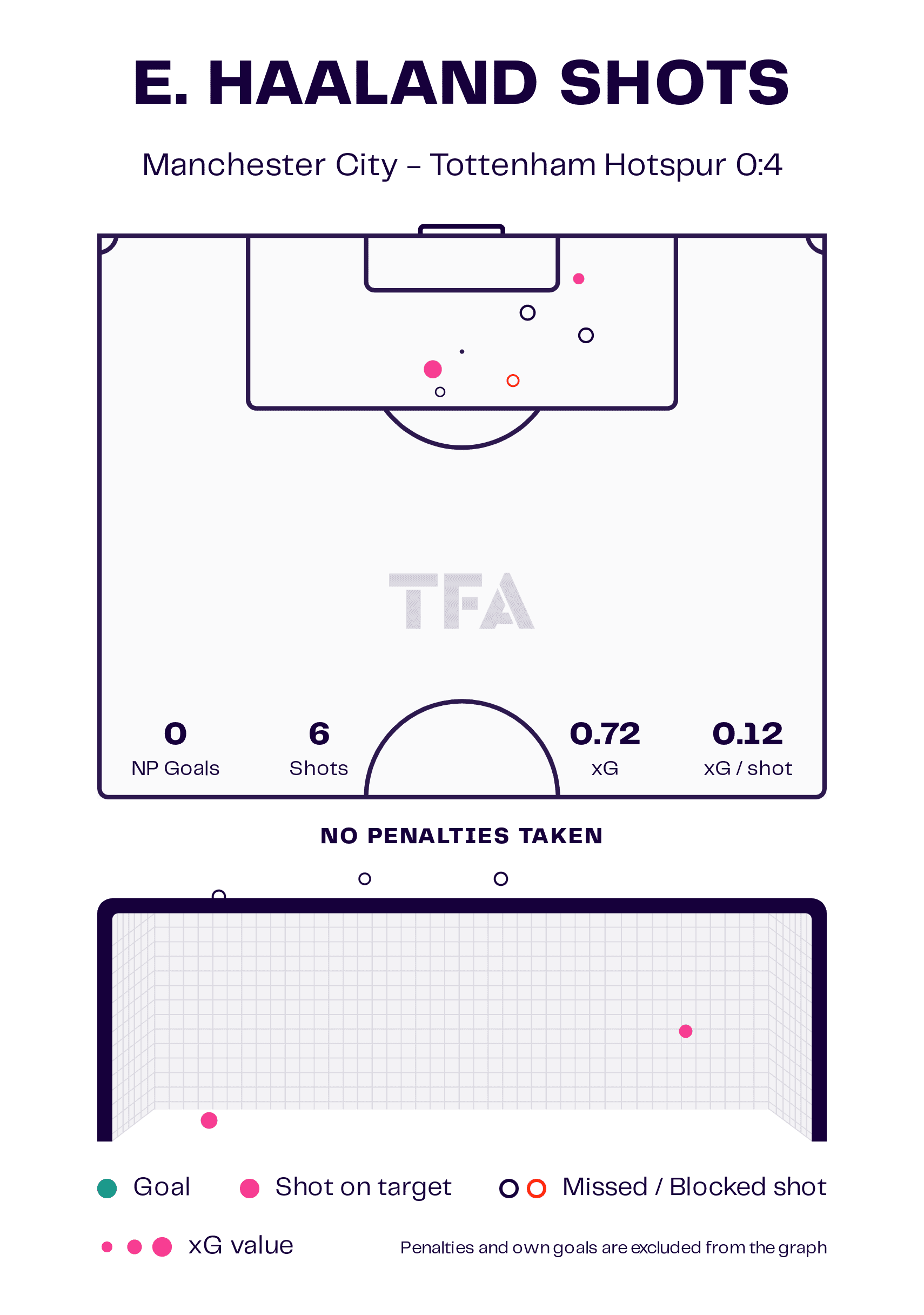
In the Tottenham game, Haaland missed several gilt-edged chances, failing to convert his dominance in the air into goals. He had seven shots in total but only managed to hit the target three times. This profligacy proved costly, as City desperately needed their star striker to capitalize on their limited opportunities.
The sources suggest that Haaland’s struggles might be linked to the team’s overall tactical approach. The absence of traditional wingers has reduced the number of crosses into the box, limiting Haaland’s opportunities to utilize his aerial prowess. Additionally, the lack of width in attack has made it easier for opposing defences to mark Haaland closely, restricting his movement and reducing his effectiveness.
The Psychological Impact: A Crisis of Confidence
The sources highlight the psychological impact of City’s recent slump, suggesting that the team is grappling with a crisis of confidence. The string of defeats has dented their aura of invincibility, leaving them looking vulnerable and unsure of themselves.
Guardiola acknowledged the psychological toll of the losing streak, stating, “Of course [the players are struggling]. We are happy when we win and concerned when we don’t win. It’s normal.” The team’s body language on the pitch has reflected this loss of confidence, with players appearing hesitant and lacking their usual swagger.
This psychological fragility is a worrying sign for City, as it could further undermine their performances and perpetuate their downward spiral. The longer the losing streak continues, the harder it will be for City to regain their confidence and rediscover their winning formula.
The Rise of the Challengers: A Shift in the Balance of Power?
City’s struggles have coincided with the resurgence of their rivals, suggesting a potential shift in the balance of power in the Premier League. Liverpool rejuvenated under Arne Slot, are now eight points clear at the top of the table. Tottenham, under the guidance of Ange Postecoglou, have also emerged as genuine contenders, showcasing their attacking prowess and tactical acumen with their emphatic victory over City.
The sources emphasize that City’s rivals are now sensing an opportunity to dethrone the reigning champions. They are playing with renewed confidence and belief, knowing that City are no longer the unbeatable force they once were.
City’s ability to respond to this challenge will be crucial in determining whether their era of dominance is truly over. They need to rediscover their defensive solidity, find solutions for their midfield conundrum, and reignite Haaland’s goal-scoring form.
Conclusion: The End of an Era or a Temporary Blip?
Manchester City are undeniably at a crossroads. The sources paint a bleak picture of a team grappling with multiple challenges, from tactical imbalances to psychological fragility. Their era of dominance is under serious threat, as their rivals seize the opportunity to exploit their weaknesses.
However, it would be premature to declare the end of City’s dynasty. Guardiola, a master tactician, is renowned for his ability to adapt and evolve his team’s approach. He will undoubtedly be working tirelessly to address City’s current shortcomings and find solutions to their problems.
The coming weeks will be crucial in determining City’s fate. Their response to this adversity will reveal whether they can overcome their current challenges and reassert their dominance or whether they are destined for a prolonged period of decline. The Premier League landscape is shifting, and the once-unassailable Cityzens are now facing a battle to retain their crown.
Visuals via TFA data viz engine