Manchester City, renowned for their fluid, possession-based attacking style, have long been a force to be reckoned with in the Premier League. However, a recent tactical shift away from traditional wingers has raised questions about the efficacy of this new approach, especially in light of a string of defeats that saw City suffer five consecutive losses, a first in Pep Guardiola’s managerial career. This article analyzes the effectiveness of Manchester City’s attack sans traditional wingers, examining the rationale behind the change, its impact on City’s attacking output, and its potential pitfalls.
The Evolution of City’s Attack: From Wide Men to Inverted Forwards
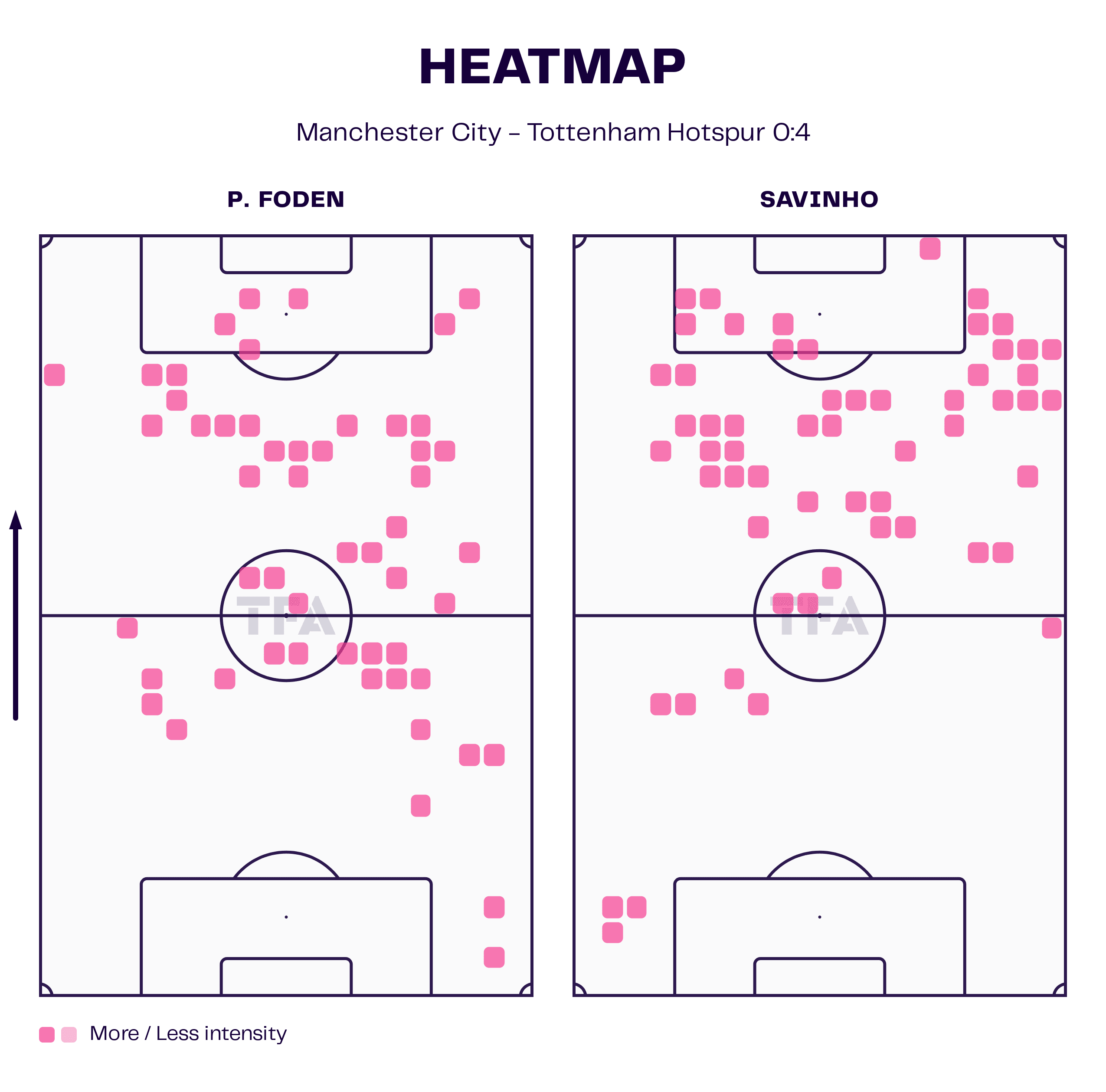
Under Guardiola, Manchester City have typically employed wide forwards who cut inside, creating space for overlapping full-backs and facilitating intricate passing combinations in central areas. However, in the game against Tottenham, Guardiola opted for a more narrow attacking formation, with Phil Foden and Savinho operating as inverted forwards behind Erling Haaland.
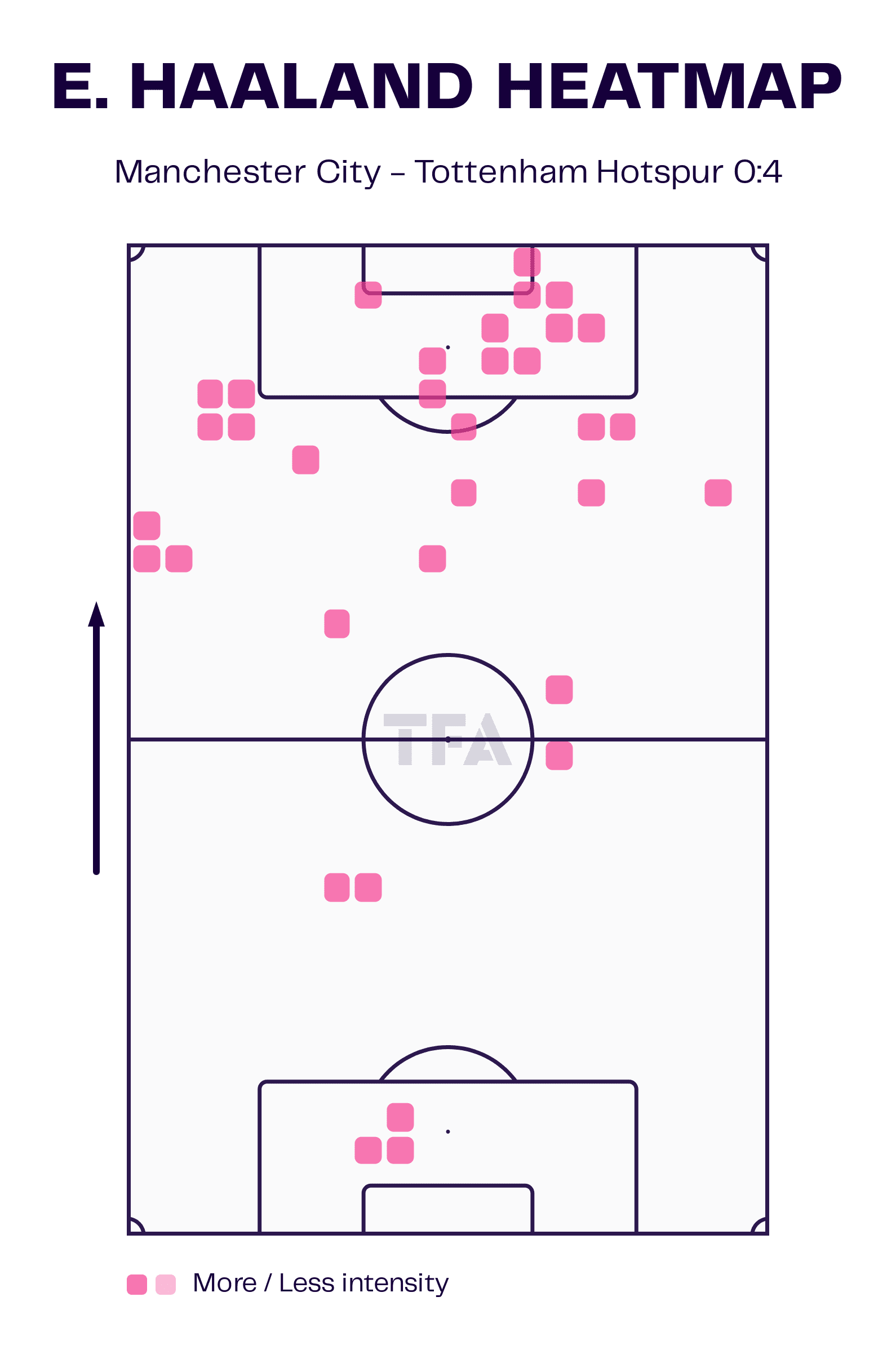
This tactical tweak aimed to maximize central presence, overload Tottenham’s midfield, and exploit Haaland’s aerial prowess with crosses from deep.
The decision to deviate from the traditional winger system was perhaps influenced by a combination of factors. The absence of key midfielders like Rodri might have prompted Guardiola to seek alternative avenues for creating chances, focusing on central areas where City could theoretically exert more control. Additionally, the desire to adapt to the opposition’s strengths and weaknesses might have played a role, with Tottenham’s vulnerability to crosses from deep potentially influencing Guardiola’s choice of formation.
A System Misfiring: Narrowness, Predictability, and Defensive Vulnerability
While the intention behind the narrow formation might have been sound, its execution proved disastrous. The lack of width in attack made City’s build-up predictable and easy to defend against. Tottenham’s full-backs could confidently tuck inside, knowing that there were no traditional wingers to stretch the play and exploit the space behind them. This allowed Tottenham to condense their defensive structure, limiting City’s passing options and stifling their creativity.

Furthermore, the narrow attacking shape created a disconnect between City’s attack and defence. With Foden and Savinho operating centrally, the onus of providing width fell on the shoulders of the full-backs, Kyle Walker and Josko Gvardiol. This left them exposed defensively, particularly against the pace and trickery of Son Heung-min and Destiny Udogie. The first goal, for instance, stemmed directly from Savinho’s inability to track back quickly enough, allowing Kulusevski space to deliver the cross for Maddison’s opener.
The Case for Traditional Wingers: Stretching the Play, Creating Space, and Balancing the Attack
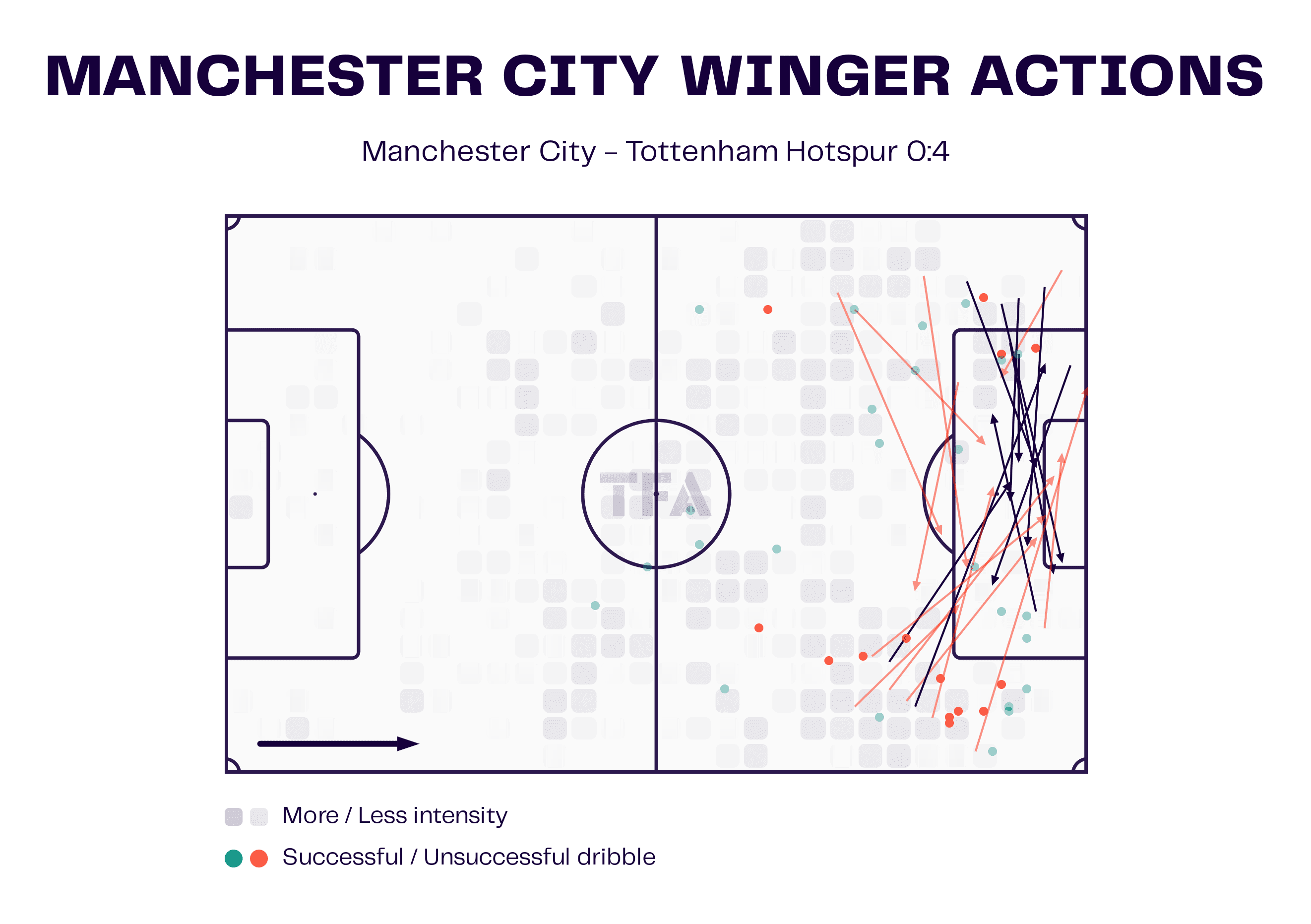
The Tottenham game served as a stark reminder of the importance of traditional wingers in City’s attacking setup. Wingers provide much-needed width, stretching the opposition’s defence and creating space for central players to operate. Their ability to run at defenders, deliver crosses, and cut inside keeps the opposition guessing, preventing them from compacting their defensive structure.
Moreover, the presence of traditional wingers helps to balance City’s attack. It allows the full-backs to focus on their defensive duties without being overburdened with attacking responsibilities. This, in turn, strengthens City’s defensive solidity and reduces their vulnerability to counter-attacks.
The Importance of Adaptability: Striking a Balance Between Width and Central Presence
The effectiveness of City’s attack without traditional wingers ultimately depends on their ability to adapt to different opponents and game situations. While a narrow attacking shape might be effective against certain teams, it can be detrimental against others, particularly those with pacey full-backs and a solid defensive structure.
Guardiola must find a balance between maximizing central presence and maintaining adequate width. This might involve utilizing versatile players who can comfortably operate both centrally and out wide, or incorporating tactical tweaks that allow City to switch between different attacking shapes depending on the flow of the game.
Conclusion: The Winger Conundrum: A Tactical Balancing Act for Guardiola
The effectiveness of Manchester City’s attack without traditional wingers remains a topic of debate. While the narrow formation can be effective against certain opponents, it also carries inherent risks, as demonstrated by the Tottenham game. The lack of width can make City’s attack predictable, limit their creativity, and expose their defence.
Guardiola’s challenge is to find a tactical balance that allows City to retain their attacking potency while mitigating the risks associated with a narrow formation. This might involve utilizing versatile players, incorporating tactical adjustments, or reverting to a system that includes traditional wingers. The evolution of City’s attack is an ongoing process, and the coming weeks will be crucial in determining the optimal approach for Guardiola’s side.
Visuals via TFA data viz engine