Manchester City’s Champions League encounter against Paris Saint-Germain was a tale of two halves, a stark demonstration of how a team can lose control despite initially dominating. The match, which ultimately ended in a 4-2 victory for PSG, saw City squander a two-goal lead and succumb to a resurgent Parisian side. This analysis delves into the tactical and psychological shifts that led to Manchester City’s collapse, highlighting key moments and strategic errors that contributed to their downfall. It examines how a team that seemed in firm control could so quickly unravel, offering insights into the dynamics of elite-level football and the importance of maintaining focus throughout a match.
Manchester City’s Early Dominance in second-half
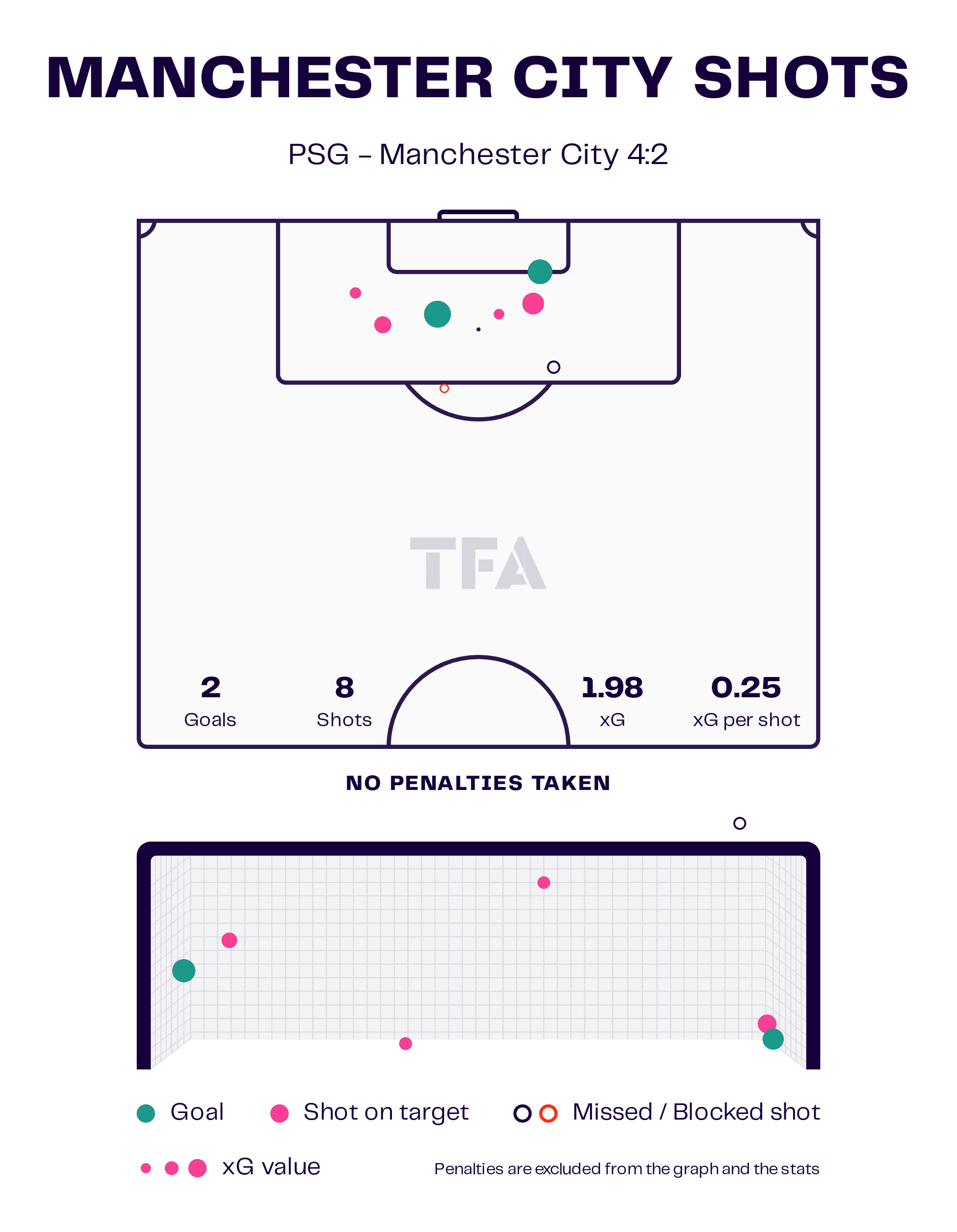
The first half of the match was largely controlled by Manchester City. The team executed their game plan effectively, showcasing tactical superiority and clinical finishing. They took the lead, demonstrating their ability to break down the PSG defence. Kevin De Bruyne’s playmaking was instrumental, finding Erling Haaland and then striking himself. The team seemed to have a firm grip on the game. Manchester City’s defensive organization was solid, limiting PSG’s chances and frustrating their attacking attempts. The first half showcased City’s ability to control the tempo of the game, dictate the flow of play and execute their tactical plan effectively. It was a display of tactical astuteness and an execution of their strategy. At this point, Manchester City appeared to be well on their way to victory.
The Turning Point: Dembele’s Goal
Dembele scored for PSG, with a deflected shot finding the net. This goal, despite being somewhat fortuitous, shifted the momentum and provided PSG with a lifeline. It was a goal that had an element of luck to it, but it was also a moment that highlighted the fine margins in a game of football, and the importance of taking any opportunities that arise. This goal provided a significant psychological boost for PSG and a possible warning to Manchester City.
The Second Half: A Drastic Shift
The second half was in stark contrast to the first. PSG emerged with renewed energy, driven by tactical adjustments and a revitalized spirit. Manchester City, on the other hand, seemed to lose their focus and struggled to maintain their earlier level of performance. The team lost their defensive structure, and this allowed the opposition to find space and create scoring opportunities.
The Defensive Collapse

Manchester City’s defence, which had been so solid in the first half, started to crumble in the second. They conceded goals in quick succession. The team was caught out of position on several occasions, failing to close down the opposition effectively. The lack of defensive cohesion allowed PSG to exploit weaknesses, and take advantage of the spaces that were opening up.
The Impact of Substitutions
PSG’s substitutions had a major impact on the game. Players like Ramos, who came off the bench, made a significant impact, scoring goals and causing problems for the Manchester City defence. Ramos’s contributions were key to PSG’s comeback. The substitutions introduced fresh legs and new ideas, disrupting the rhythm of the game. They added pace, creativity, and determination to the team.
Manchester City’s Tactical Missteps

As the game progressed, Manchester City made tactical errors that contributed to their downfall. They struggled to adapt to PSG’s change in tactics, and they could not maintain their own level of play from the first half. Their inability to adjust to the situation meant that they were unable to stop the tide from turning.
Psychological Factors
Psychological factors also played a role in Manchester City’s collapse. The team seemed to lose confidence after conceding the first goal, and they struggled to regain their composure [5]. They became vulnerable when facing the pressure of a resurgent PSG. The mental aspect of the game became crucial, and City was not able to deal with the change in momentum.
Lack of Authority in Defence
A lack of authority at the back for Manchester City was exposed. The defence seemed to lose their way, and this allowed PSG to take advantage, and get themselves ahead. The team struggled to maintain their defensive shape, and they became vulnerable to PSG’s attacks.
VAR Controversy
In the closing stages of the match, the VAR was called into action, leading to a goal for PSG, which ultimately sealed the victory for the French side. This further demoralized the Manchester City players and demonstrated a complete turnaround from the first half.
Individual Errors
Individual errors also contributed to the downfall. One such error saw Manchester City’s keeper, Ederson, make an uncharacteristic mistake, losing the ball and giving the opposition a chance. These individual mistakes proved to be costly for Manchester City, highlighting the importance of maintaining concentration throughout the game.
The Shift in Momentum
The shift in momentum during the second half was a key factor in Manchester City’s collapse. PSG’s comeback was fueled by their renewed sense of purpose, and their ability to capitalize on Manchester City’s mistakes. Once PSG got in front, the Manchester City players seemed to lose hope, and this meant that the French side was able to see out the game and take the victory.
The Impact on the Champions League
The defeat had significant implications for Manchester City’s Champions League campaign. It showed how quickly a team can lose control, and it meant that they were going to have to work even harder to qualify for the knockout stages of the competition. It was a reminder of the importance of consistency, and the dangers of letting the opposition back into a game, regardless of the score.
The Aftermath
In the aftermath of the game, Manchester City needed to analyze what had gone wrong and learn from their mistakes. They needed to work on the mental side of the game and develop ways to maintain their focus and composure when they come under pressure. They needed to show that they could bounce back, and show they had the mental strength to do so.
A Lesson Learned
The match served as a valuable lesson for Manchester City. It highlighted the need to maintain focus and remain flexible when things are not going their way. It demonstrated that in football, a game is never over until the final whistle is blown. And that a team is vulnerable to losing their control and losing the game if they allow the opposition a way back into the game.
Conclusion: The Fragility of Control
In conclusion, Manchester City’s defeat against PSG was a demonstration of the fragility of control in football. Despite dominating the first half, they lost their grip on the game due to a combination of tactical errors, defensive lapses, and psychological factors. The match underscored the importance of maintaining concentration and composure throughout a match. It was a reminder that in football, the momentum can shift at any moment and that any team is vulnerable to a collapse if they are not prepared for the unexpected. The match provides valuable lessons for Manchester City and serves as a reminder of the unpredictable nature of elite football. The match was a clear example that a game is never won until the final whistle, and even if a team is in total control, they are vulnerable to losing their grip on the game.
Visuals via TFA data viz engine